Brian Morin is building a fuse inside the battery. The industry is lining up behind it.
A materials scientist taking on the problem that haunts the lithium-ion battery, fire, with a fuse built inside the cell and a coalition of the industry behind it.
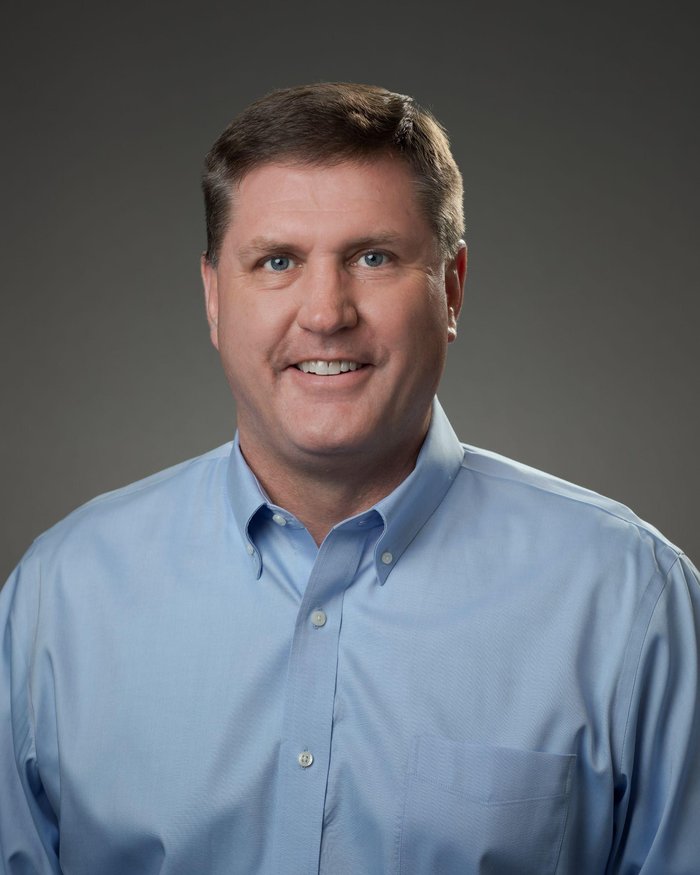
Brian Morin set out to solve the problem that haunts the lithium-ion battery: fire. As co-founder and chief executive of Soteria Battery Innovation Group, he has built both a technology and an unusual coalition around a single goal, making battery fires far rarer.
The technology is elegant. Soteria's architecture acts as a fuse inside the cell, using thermally stable separators and metallised current collectors that cut the flow of current under the conditions that lead to thermal runaway. The company says the approach can reduce battery fires by upward of ninety per cent, while also improving cost and energy density.
The strategy is as considered as the science. Rather than guard the invention, Morin built it into an open consortium, drawing members from NASA and Mercedes to Dow, Lenovo, Teijin and dozens of others, on the logic that a safety architecture only matters if the whole industry can adopt it. Entrepreneur Magazine named Soteria its most fundable company in 2018.
He came to it as a builder. A materials scientist with a doctorate from Ohio State, he began his career at DuPont and Milliken and founded two materials companies, Innegrity and Dreamweaver International, before Soteria, and has served on the board of NAATBatt International. His work is a bet that the industry's most dangerous flaw is also one of its most solvable.
He chose the Science and Technology and the Associations and Industry Bodies questions. Click any to read his answer.
01Science and TechnologyWhat idea about battery safety deserves far more attention than it has received?Read answer +
One thing I think the industry needs to talk about more is that there is probably no single solution to battery safety.
We tend to look for one. Maybe the next chemistry will solve it. Maybe solid-state will solve it. Maybe better separators, better battery management systems, better fire suppression or better pack design will solve it. All of those things can make a meaningful difference, but batteries are complex systems and failures can begin in many different ways.
A manufacturing defect can create an internal short. A cell can be mechanically damaged. A charger can malfunction. A battery can be exposed to heat, vibration, water or abuse that the designer never intended. Even a very safe chemistry still contains stored energy.
So I think we need to stop asking, “What is the safety solution?” and start asking, “What combination of protections makes this system resilient when something goes wrong?”
That is really how we think about the problem at Soteria. We look at safety in layers. Can we make the cell itself less likely to enter thermal runaway? Can we design the pack so that one failing cell doesn’t propagate to its neighbors? Can we detect problems earlier? Can we learn from what batteries are experiencing in the field?
None of those replaces the others.
I sometimes compare it to safety in automobiles. We didn’t choose between seat belts, airbags, anti-lock brakes and crash structures. We gradually built multiple layers because accidents have many causes and consequences.
I think batteries need the same philosophy.
The good news is that the industry already has many of the pieces. Soteria’s role is increasingly to help bring those pieces together, finding promising technologies, testing them, helping companies apply them and creating ways for the industry to learn collectively.
The future of battery safety probably isn’t one breakthrough. It is an ecosystem of technologies that work together.
02Science and TechnologyWhat is the hardest technical problem you’ve worked on, and what did it teach you?Read answer +
One of the hardest technical problems I have worked on is making a current collector behave almost like a fuse inside a battery cell.
A current collector normally has a very simple job: conduct electricity as efficiently as possible. But in an internal short circuit, that same ability to conduct current can become part of the problem. The battery continues delivering energy into a very small defect, generating heat until the cell enters thermal runaway.
The idea behind a metallized polymer current collector, or MPCC, sounds simple: make the conductive layer thin enough that abnormal current around a short can cause it to disconnect locally, while allowing the rest of the battery to continue functioning normally.
Getting those two behaviors at the same time is difficult.
The material still has to conduct extremely well during normal operation. It has to survive coating, drying, calendering, slitting and winding. It has to tolerate electrolyte, cycling and mechanical stresses. And ultimately it has to be manufactured at a cost and scale that makes sense for the battery industry.
That experience taught me that the hardest part of innovation usually isn’t proving that something can work once. It is getting several competing requirements to work at the same time.
Safety, performance, manufacturing and economics all have to coexist.
It is also one reason Soteria has become much more collaborative over time. A material company can’t solve all of those problems by itself. You need cell manufacturers, equipment companies, researchers, testing organizations and customers working together.
I have come to think of Soteria less as the company that needs to have every answer and more as the organization that helps bring the right people and technologies together to solve the problem.
An invention is something you can demonstrate. An innovation is something the industry can actually use.
03Associations and Industry BodiesWhy should the battery industry cooperate on safety rather than compete on it?Read answer +
I believe safety is one of the areas where competition can actually hurt the battery industry.
Companies absolutely should compete on performance. Compete on energy density, cost, charging speed, cycle life, manufacturing efficiency and product design. Those competitive pressures have driven extraordinary progress.
But I don’t think we should compete on who knows how to prevent a battery from hurting someone.
The reason is that a significant battery fire rarely affects only the company whose product was involved. Consumers see a battery fire. Regulators see a battery fire. Insurers see a battery fire. The public usually doesn’t distinguish between a particular chemistry, cell manufacturer or pack design.
One company’s failure can reduce confidence in everybody’s products.
There is another problem as well. Battery failures are relatively rare, which means any one company has a limited dataset from which to learn. A cell manufacturer sees one set of failures. An OEM sees another. Fire departments, insurers and researchers see still others.
If everybody keeps that information inside their own walls, we can end up learning the same lessons over and over again.
That doesn’t mean companies need to expose confidential information or give away proprietary technology. There is a large precompetitive space where we can cooperate: understanding failure mechanisms, developing better tests, sharing anonymized data, improving standards and identifying technologies that reduce risk.
That philosophy is really why Soteria was built as a consortium.
Our role is not to tell the industry that we have all the answers. It is to create a place where companies that normally compete can work together on problems that affect all of them.
Battery safety is ultimately a shared-interest problem.
If one manufacturer makes a safer battery, that is good for that company. If the entire industry becomes safer, everybody wins.
04Associations and Industry BodiesHow can the industry share safety innovations without removing the incentive to invent them?Read answer +
One of the biggest challenges in collaboration is intellectual property.
We often say that companies should share safety technology, but there is an obvious problem with that statement: somebody had to spend the time and money to invent it.
If we simply tell innovators to give their technology away because it improves safety, we remove much of the incentive to develop the next technology.
At the other extreme, if an important safety technology is locked up so tightly that very few companies can use it, the industry doesn’t receive much benefit from it either.
We created the Soteria IP Exchange, or IPX, to try to find a middle ground.
The basic idea is that companies and inventors can contribute safety-related technologies to a shared licensing platform. They retain ownership and receive a share of the royalties while at the same time manufacturers gain access under predefined, broadly available licensing terms rather than negotiating an entirely new agreement every time.
The objective isn’t to make intellectual property free. It is to make important safety technology accessible.
I think that distinction matters.
A small technology company may have a wonderful invention but very little ability to license it across a global battery industry. Meanwhile, a cell manufacturer may want to evaluate multiple safety technologies without spending months negotiating separately with every inventor.
The IPX is meant to help both sides.
Over time, I would like to see it become a library of complementary safety technologies, cell technologies, pack technologies, sensing technologies and others, that manufacturers can choose from depending on the problem they are trying to solve.
Soteria’s role is to help build the bridge between the people creating those technologies and the companies capable of deploying them at enormous scale.
If we can reward innovation while making safety technologies easier to adopt, I think we get the best of both worlds: more invention and more deployment.
With thanks to Brian Morin for going on the record, and for answering so generously.