
UKBIC research shows battery cell formation can be accelerated by 40% with only a modest impact on cycle life



Kenneth Nwanoro, Ameir Mahgoub & Richard LeCainUK Battery Industrialisation Centre · 18 Nov 2026
Published as submitted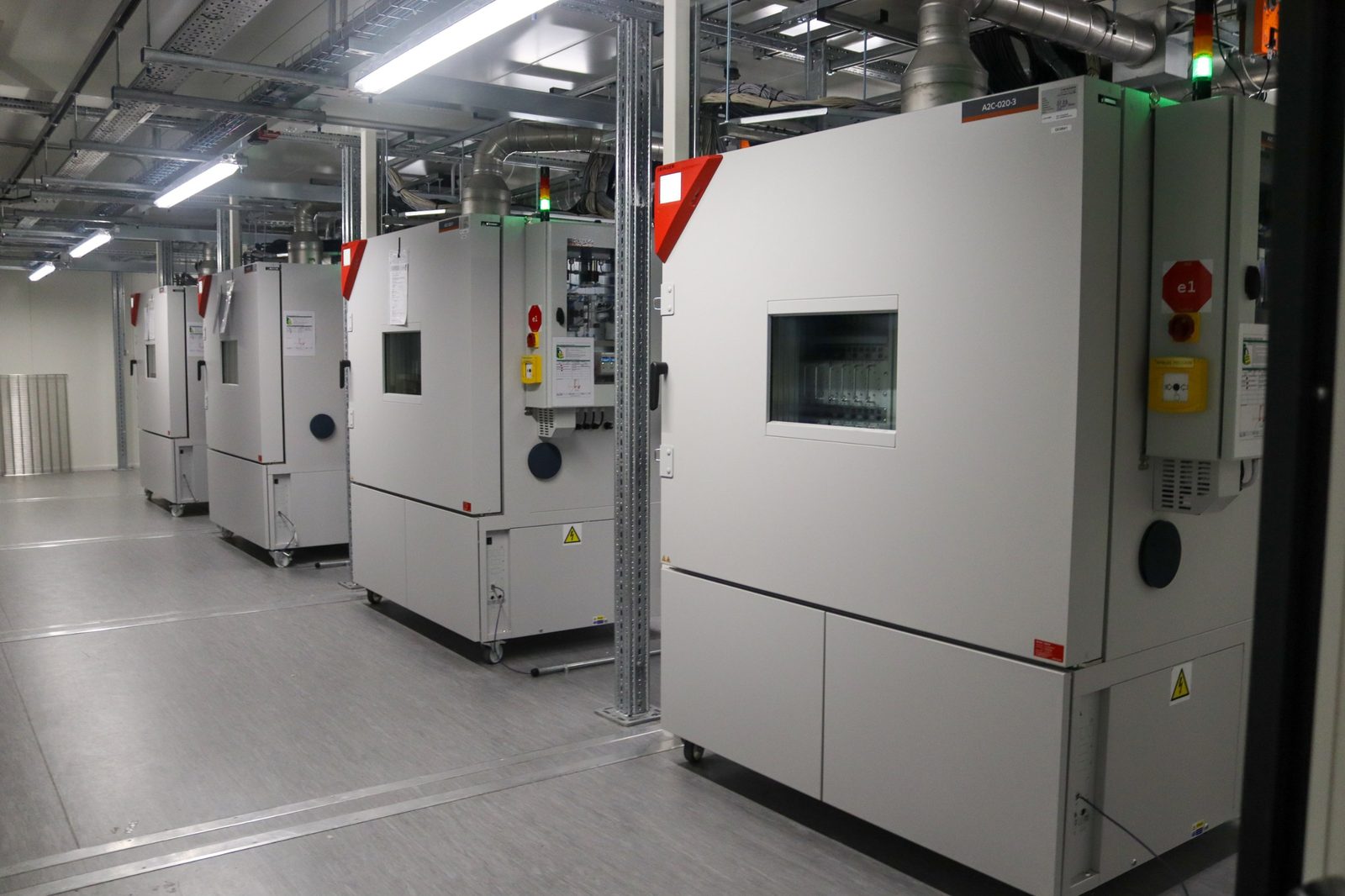
The UK Battery Industrialisation Centre has shared a new technical paper on battery cell formation, the final stage of cell manufacturing. The paper compares 14 formation protocols and reports their effect on production time, energy use and cycle life. It is published below as submitted by UKBIC.
UKBIC research shows battery cell formation can be accelerated by 40% with only a modest impact on cycle life
New research from the UK Battery Industrialisation Centre (UKBIC) has demonstrated that battery cell formation processes can significantly reduce manufacturing time and energy consumption while maintaining comparable long-term performance.
In a newly published technical paper, Optimising Cell Formation: Impact of Formation Protocols on Cell Manufacturing Cost and Performance – A Case Study and Industry Insights, authors Kenneth Nwanoro (Senior Modelling & Simulation Engineer), Ameir Mahgoub (Head of Product Engineering) and Richard LeCain (Chief Technology Officer) examine one of the most critical and cost-intensive stages of battery manufacturing.
The study has found that cell formation protocols can be made approximately 40% faster, delivering substantial productivity and energy-saving benefits, while incurring only around a 6% reduction in cycle life compared with the best-performing standard protocol.
Formation, ageing and testing represent the final stage of battery cell manufacturing and are responsible for the controlled electrochemical activation of lithium-ion cells. The process is widely recognised as a major manufacturing bottleneck, accounting for up to 30% of total production time, consuming significant energy, and contributing 15-32% of a cell’s conversion (non-material) cost.
Industry estimates suggest that optimised formation strategies could deliver pack-level savings of between £1.50 and £3.75 per kWh, making formation optimisation one of the most attractive opportunities for improving battery manufacturing economics.
To investigate, UKBIC evaluated 14 formation protocols using 21700 NMC811/Gr-SiOx cells with a nominal capacity of 4.8 Ah. All were designed and made at UKBIC
The research compared UKBIC’s standard formation protocol against 13 alternative approaches before assessing long-term cycling performance to an 80% state of health.
The results showed that accelerated formation protocols can achieve:
- Up to 40% reduction in formation duration
- Up to 40% reduction in energy consumption
- Comparable long-term performance to standard formation processes
- A modest reduction in cycle life compared with the strongest-performing baseline protocol
The research also revealed several important insights that challenge conventional industry assumptions. Longer ageing periods during formation were shown not to automatically improve cell performance, while protocols delivering the strongest formation-stage metrics did not necessarily provide the best long-term cycling outcomes.
Instead, the study highlights the complex and often non-linear relationship between formation parameters and battery degradation, underscoring the importance of optimising charging currents, formation endpoints, ageing periods and process conditions.
“Formation is one of the most resource-intensive stages of battery manufacturing and has a significant impact on production cost, throughput and cell performance. Our research demonstrates that manufacturers can substantially reduce formation time and energy consumption without significantly compromising long-term cell performance, provided protocols are carefully designed and validated.”
Kenneth Nwanoro, Senior Modelling & Simulation Engineer, UKBIC
“As battery manufacturers seek to improve competitiveness and scale production, formation optimisation represents one of the most immediate opportunities to unlock productivity gains. This work demonstrates the importance of understanding the relationship between manufacturing processes and long-term cell performance. It also provides valuable insights for organisations developing next-generation battery production strategies.”
Richard LeCain, Chief Technology Officer, UKBIC
To download the technical paper, click here.
About UKBIC
UKBIC is the UK’s national manufacturing development facility, providing scale-up, laboratory expertise, and module and pack assembly, and helping develop skills to support the sector.
By bridging the gap between research and high-volume manufacturing, UKBIC plays a critical role in supporting the UK’s transition to net zero and strengthening its position in the global battery supply chain.
UKBIC provides state-of-the-art equipment, technical expertise, and training to help manufacturers and researchers validate processes, optimise performance, and reduce risk before committing to large-scale investment.
The facility offers both pilot and industrial-scale lines, enabling customers to trial new materials and processes under real-world conditions.
UKBIC also supplies its own benchmark products for component testing and delivers specialist training to develop the skills required for a battery-powered future.
UKBIC is uniquely positioned to tackle complex manufacturing challenges. With expertise in processing diverse materials and products, and access to a broad range of advanced technologies, its engineers bring a comprehensive understanding of issues that span the entire battery value chain.
UKBIC is a delivery partner for the Battery Innovation Programme, funded by the Department for Business, Innovation, Science and Trade (DBIST) and delivered by Innovate UK.
Please noteThis paper is published as submitted by UKBIC. Its findings, data and conclusions are the authors’ own. The Battery Ledger does not review, verify or endorse submitted research.
← Back to The Research RoomMore from The Battery Ledger
Swipe for more → Photos and logo: Sila
Made in Washington: Sila’s Silicon Anodes Win Panasonic
Sila has signed a multi-year deal to supply Panasonic Energy with Titan Silicon anode material from its Moses Lake plant, in a partnership it says could bring over $1 billion…
 Photo: Proper Voltage
Salt Vault: Sodium-Ion Moves Into the AI Data Centre
Proper Voltage has launched a backup power system for AI data centres built on UNIGRID’s sodium-ion cells, with orders open now and deliveries from April 2027.
 Illustration: The Battery Ledger
Made in Michigan: Our Next Energy Takes Its LFP Cells to Nasdaq
The Michigan battery maker has agreed a Nasdaq deal valuing it at $600 million, potentially rising to about $1 billion with new capital, as it builds a business on rail,…
 Photo: courtesy of Dr Francisco Trinidad
Dr Francisco Trinidad
Former Director of Battery Technology, Exide · Alpha Beta Society
For forty-three years he advanced the oldest rechargeable battery there is, from a Madrid laboratory to the technology direction of a global…
 Photo: courtesy of Dr Graeme Fraser-Bell
Dr Graeme Fraser-Bell
Vice President, Lithium Sales · ENTEK
Three decades at the commercial heart of the battery separator industry, now helping scale ENTEK’s giga-facility in Indiana.
 Photo: courtesy of Jill Pestana
Jill Pestana
Founder & CEO, Pestana Solutions · Director of Research & Programming, NAATBatt International
A battery scientist with more than a dozen patents who built a career after being told her personality was ‘not that of…
Section 45X: same-facility and domestic content test for integrated components
- 1 JanNew Jersey: permanent labelling requirement, currently held back
- 1 JanWisconsin: producers must join a stewardship organisation and submit a plan
44 more fixed deadlines after this one
See every deadline Illustration: The Battery Ledger
Beyond the battery datasheet: why transparency matters in procurement
- 30 NOVWorld Reuse & Recycling ForumShanghai
- 2 DECBattery Asset Management Summit EuropeRome
- 7 DECAABC - Advanced Automotive Battery ConferenceSan Diego
- 12 JANIndia Battery & Critical Materials ConferenceNew Delhi
- 20 JANIERC - International Electronics Reuse & Recycling CongressValencia