
Beyond the Battery Datasheet: Why Transparency Matters in Battery Procurement
Simon FawazAustralian Battery Transparency Standard · 20 Nov 2026
Industry perspective · Published as submitted
Simon Fawaz, founder and chair of the Australian Battery Transparency Standard (ABTS), argues that battery buyers need product information that is consistent, comparable and backed by evidence, and sets out the thinking behind ABTS, an initiative still under development. The piece is published as submitted, as an industry perspective. The views are the author’s own.
Beyond the Battery Datasheet: Why Transparency Matters in Battery Procurement
Battery storage is becoming increasingly important across electricity infrastructure, commercial energy systems, industrial operations, renewable energy projects and energy resilience.
As the market expands, buyers are presented with a wide range of battery technologies, system configurations, warranties, performance claims and financial propositions. Yet comparing products on a consistent basis remains difficult.
A battery’s advertised capacity, cycle life, warranty period or nominal price may provide only a partial understanding of expected performance over the life of an installation. The conditions under which figures are achieved can materially affect the outcome.
For project developers, asset owners, procurement teams, engineers, insurers and investors, the issue is not simply whether information exists. It is whether it is consistent, clearly defined, comparable and supported by appropriate evidence.
A specification is not necessarily a comparison. Datasheets describe individual products, but may not enable buyers to compare competing technologies on equivalent assumptions. Cycle life, for example, depends on operating temperature, depth of discharge, charge and discharge rates, end-of-life capacity threshold and test conditions. Warranty periods also do not necessarily represent expected service life, and may be conditional on throughput, maintenance, operating limits and monitoring.
Battery procurement should consider lifecycle information including usable energy and power, efficiency, expected service life, lifetime energy throughput, capacity retention, environmental limits, warranty conditions, maintenance, safety evidence, supply-chain information and end-of-life pathways.
Transparency should also distinguish manufacturer-declared information from test results, independently assessed information and verified information accepted against defined criteria. A manufacturer claim is not inherently invalid, but buyers should understand its source, methodology, conditions and supporting documentation. A credible framework should make uncertainty visible rather than create an artificial impression of certainty.
Better information may benefit the entire market. Manufacturers can demonstrate technology strengths more clearly. Procurement teams can reduce evaluation friction. Asset owners can better plan maintenance and replacement. Insurers and risk professionals can assess documented operating conditions and evidence. Financiers can improve technical due diligence.
Digital product records can provide extensive detail, but essential information should also be accessible at product level. A physical label can provide a consistent summary, with a digital record offering supporting documents, expanded specifications and lifecycle information. These should complement one another.
Battery transparency should remain technology-neutral. Different chemistries have different characteristics, advantages, limitations and applications. A fair framework should use clear definitions and evidence requirements while allowing purchasers to assess products against their actual needs. The objective is not to declare a single technology the winner, but to enable better-informed decisions.
Developing a credible framework requires collaboration among manufacturers, engineers, asset owners, procurement teams, insurers, recyclers, researchers, industry associations and regulators. It should be technically practical, proportionate and avoid duplicating existing standards, regulatory requirements or certification programs.
The Australian Battery Transparency Standard (ABTS) is being developed around this challenge. Its objective is to establish a consistent framework for communicating essential battery information through a readable product transparency label supported by a digital product record. The vision includes clearer information on performance, operating conditions, safety, warranties, lifecycle considerations and supporting evidence.
ABTS is intended to be technology-neutral and evidence-based. It is not intended to replace product safety standards, regulatory approvals or existing certification programs. Transparency and safety certification serve different purposes, although both may contribute to informed purchasing.
The important question is not whether the industry needs another label. It is whether buyers can confidently understand what they are purchasing, how claims should be interpreted and what evidence supports them.
As battery storage becomes increasingly important to energy infrastructure and industrial applications, the quality of information used to select, finance, deploy and manage battery systems should receive the same attention as the technology itself.
Better batteries matter. Better information about batteries matters too.
References and further reading
- World Bank, Warranties for Battery Energy Storage Systems in Developing Countries.
- IOGP, S-753 procurement data sheet and information requirements for Battery Energy Storage Systems.
- Clean Energy Council, Approved Products Program, Battery Energy Storage Systems.
- New Energy Tech Consumer Code, technical guidance for battery energy storage systems.
- IEC 62933 series, electrical energy storage systems.
This article is an industry perspective, not technical, legal, investment or safety advice. ABTS is discussed as an initiative under development, not as a government standard or replacement for established regulatory or certification requirements.
Please noteThis article is published as submitted by ABTS. Its views and conclusions are the author’s own. The Battery Ledger does not review, verify or endorse submitted research. Reference links were added by The Battery Ledger.
← Back to The Research RoomMore from The Battery Ledger
Swipe for more → Photos and logo: Sila
Made in Washington: Sila’s Silicon Anodes Win Panasonic
Sila has signed a multi-year deal to supply Panasonic Energy with Titan Silicon anode material from its Moses Lake plant, in a partnership it says could bring over $1 billion…
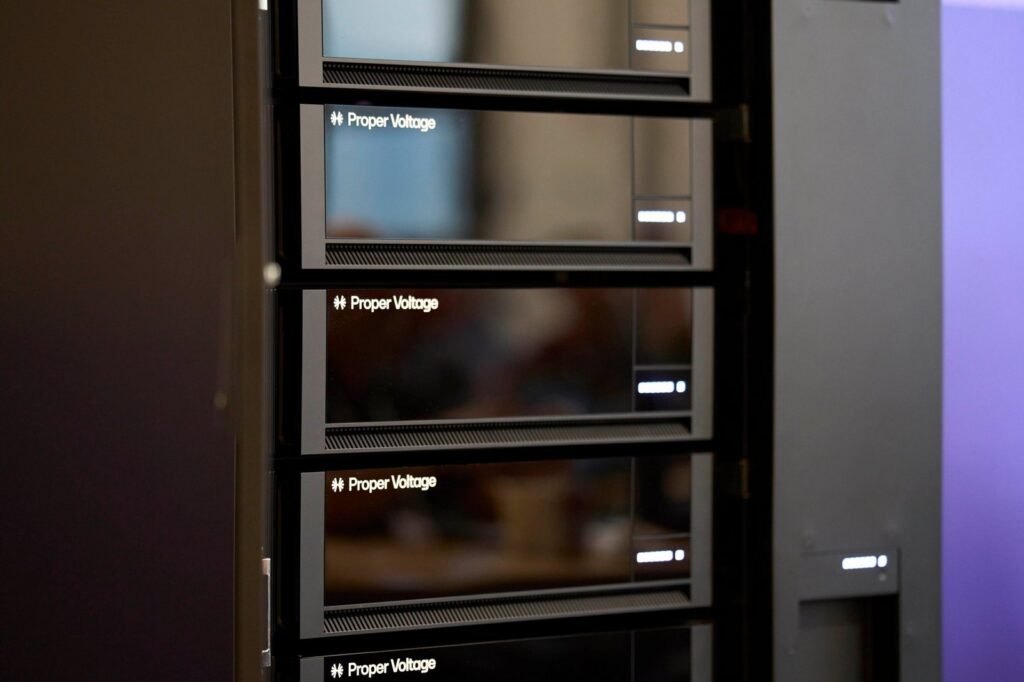 Photo: Proper Voltage
Salt Vault: Sodium-Ion Moves Into the AI Data Centre
Proper Voltage has launched a backup power system for AI data centres built on UNIGRID’s sodium-ion cells, with orders open now and deliveries from April 2027.
 Illustration: The Battery Ledger
Made in Michigan: Our Next Energy Takes Its LFP Cells to Nasdaq
The Michigan battery maker has agreed a Nasdaq deal valuing it at $600 million, potentially rising to about $1 billion with new capital, as it builds a business on rail,…
 Photo: courtesy of Dr Francisco Trinidad
Dr Francisco Trinidad
Former Director of Battery Technology, Exide · Alpha Beta Society
For forty-three years he advanced the oldest rechargeable battery there is, from a Madrid laboratory to the technology direction of a global…
 Photo: courtesy of Dr Graeme Fraser-Bell
Dr Graeme Fraser-Bell
Vice President, Lithium Sales · ENTEK
Three decades at the commercial heart of the battery separator industry, now helping scale ENTEK’s giga-facility in Indiana.
 Photo: courtesy of Jill Pestana
Jill Pestana
Founder & CEO, Pestana Solutions · Director of Research & Programming, NAATBatt International
A battery scientist with more than a dozen patents who built a career after being told her personality was ‘not that of…
Section 45X: same-facility and domestic content test for integrated components
- 1 JanNew Jersey: permanent labelling requirement, currently held back
- 1 JanWisconsin: producers must join a stewardship organisation and submit a plan
44 more fixed deadlines after this one
See every deadline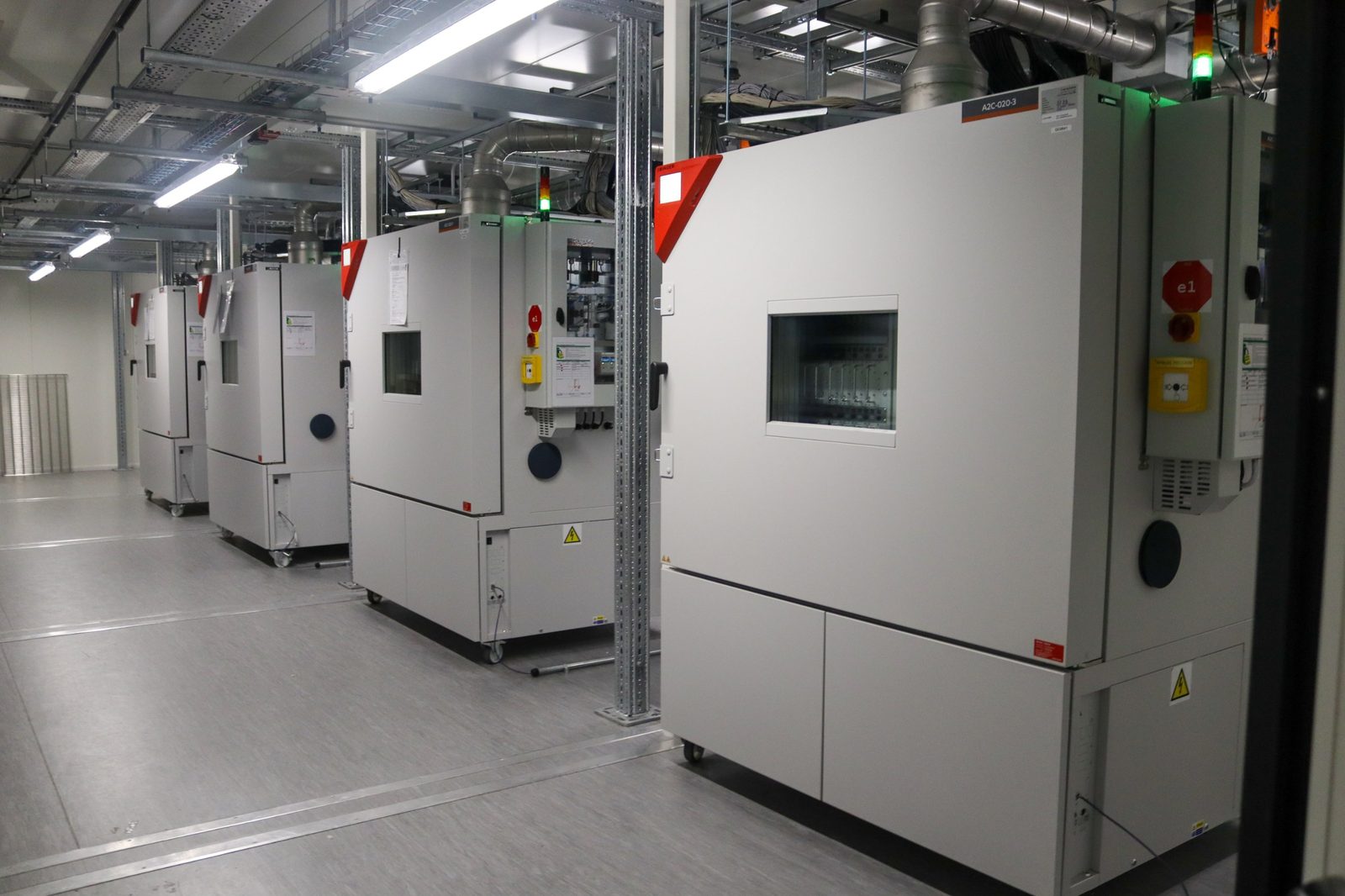 Photo: UKBIC
Battery cell formation can be 40% faster with only a modest hit to cycle life
- 30 NOVWorld Reuse & Recycling ForumShanghai
- 2 DECBattery Asset Management Summit EuropeRome
- 7 DECAABC - Advanced Automotive Battery ConferenceSan Diego
- 12 JANIndia Battery & Critical Materials ConferenceNew Delhi
- 20 JANIERC - International Electronics Reuse & Recycling CongressValencia