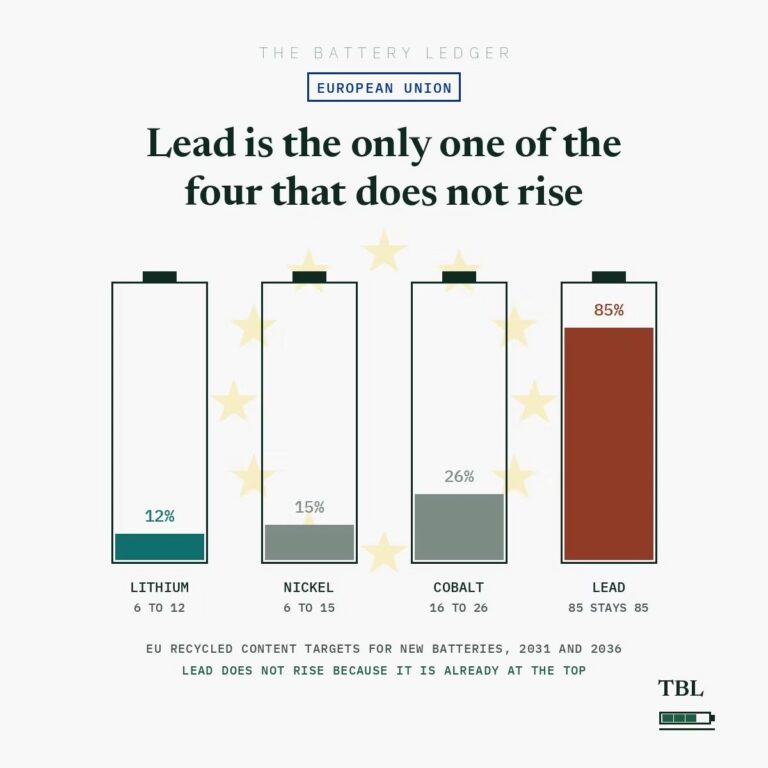
What are the EU battery recycling efficiency targets?
Recycling efficiency and material recovery are two different measures on two different timetables. Conflating them is the commonest error in reporting on the regulation.
The first targets applied on 31 December 2025. Minimum recycling efficiency, measured by weight of the battery, must reach the following.
The second tier arrives in 2030
From 31 December 2030 the figures rise to 80 per cent for lead-acid and 70 per cent for lithium-based. Nickel-cadmium and the residual category are not raised.
What recycling efficiency actually measures
This is a whole-battery figure. It is the mass of output fractions counted as recycled, divided by the mass of the battery going in. It is not the same as material recovery, which measures how much of a specific element comes out, and which carries separate targets on separate dates.
Confusing the two is the most common error in reporting on the regulation. A recycler can hit a high recycling efficiency while recovering very little lithium.
How it is calculated
A harmonised methodology for calculating and verifying recycling efficiency, together with a standard reporting format, came into force on 24 July 2025. Before that date, comparisons between operators were not reliably like for like.
See every other date in the EU Batteries Regulation Calendar.
Regulation (EU) 2023/1542, consolidated text, EUR-Lex
A summary for orientation, not legal advice.
Read next
All insights →


 Newest on The RegisterDr Francisco TrinidadFormer Director of Battery Technology, Exide · Alpha Beta SocietyRead the profile →