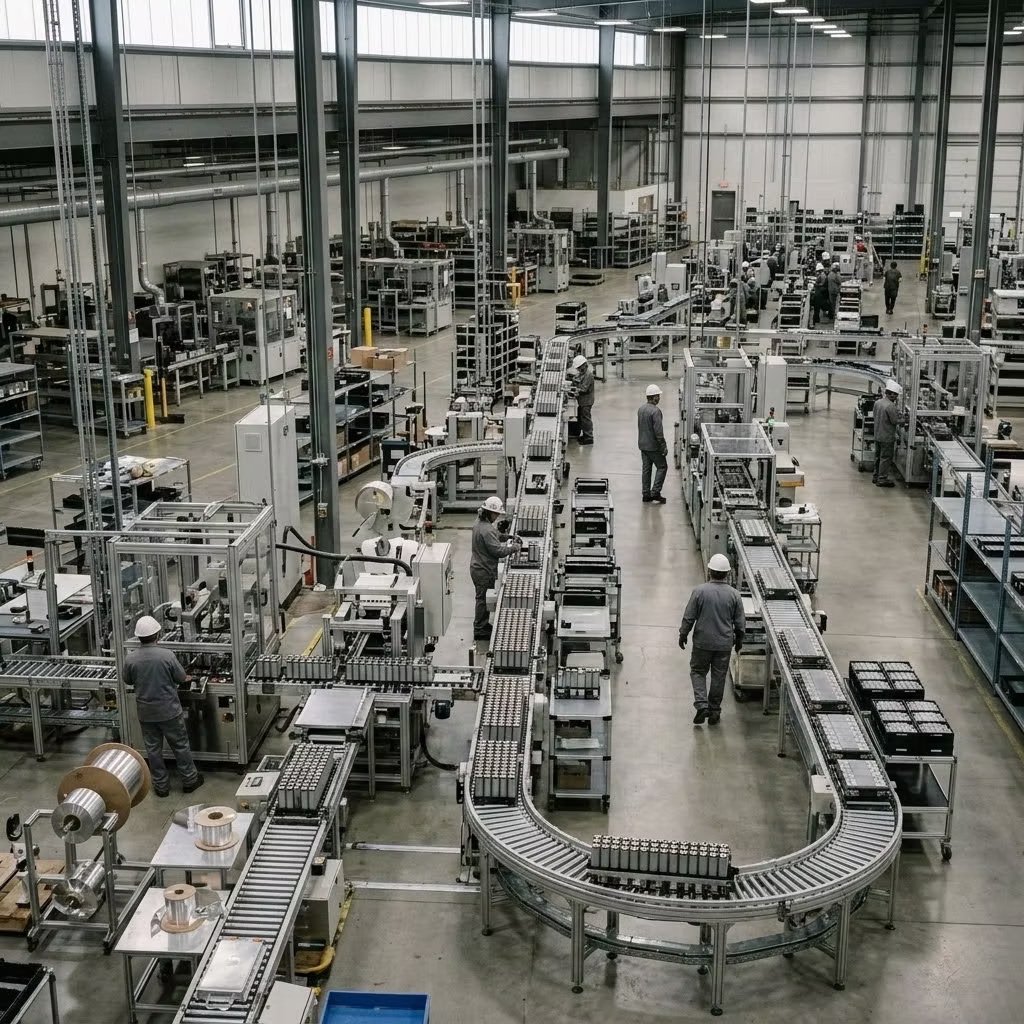
GM Is Aiming for a Domestic Sodium-Ion Battery
GM’s battery chief, Kurt Kelty, has set out a goal: a battery supply chain built on domestic materials rather than Chinese ones. The chemistry the company is developing toward that goal is sodium-ion, though the work is still at an early stage.
Kurt Kelty, General Motors’ vice-president of battery and sustainability, has spent a career around cells, at Panasonic, at Tesla, and at the silicon-anode company Sila. It is worth noting what he says GM is working toward: a battery supply chain that does not depend on China.
Speaking to CNBC on 12 September, Kelty described the aim. “We’re developing a supply chain such that, two years from now, three years from now, it will be domestic,” he said. “That’s what we’re aiming for, when we get into market, we’ve got a domestic source for that.”
The chemistry GM is developing toward that goal is sodium-ion, worked on with Peak Energy, a Denver company. This effort is aimed first at energy storage for homes, businesses, and data centres rather than electric vehicles. GM expects commercial production of the cells around 2029, which is a target rather than a firm date.
Why Sodium?
The appeal lies in the materials. Sodium-ion cathodes can be made using sodium carbonate, or soda ash. The United States holds a large share of the world’s known soda-ash reserves. This offers a route around some of the materials that China dominates. GM already makes lithium-iron-phosphate cells in the US through Ultium Cells, its joint venture with LG Energy Solution. However, those still rely on some Chinese-sourced inputs. A domestic sodium chemistry could reduce that dependence further.
Kelty was clear this is a deliberate choice. “We think it’s more valuable to develop this all domestically, take advantage of domestic supply chains, and develop a technology that’s actually better than the incumbent technology,” he said. “We are purposely going down the path of having American-developed technology. Batteries are really critical for a lot of different areas of our economy here.”
Where It Sits
It is worth being precise about what this is, and isn’t. GM’s own sodium-ion cell programme is still at the development stage. Peak Energy, its partner, has selected Sacramento for a sodium-ion storage factory. Production is targeted for early 2027, but that is Peak’s facility, not evidence that GM has yet built a domestic sodium supply chain of its own. This is an intention backed by early work, not a finished achievement.
Still, the intention is notable. It fits a pattern we have been following: the effort to build the parts of the battery that are hardest to source elsewhere closer to home. We wrote about that shift recently, in a piece on why the battery supply chain is coming home. When a carmaker of GM’s size says it is deliberately pursuing an American-made battery chemistry, that is worth noting as a direction of travel, not a destination reached.
Future Prospects
The future of sodium-ion technology looks promising. As the industry shifts towards sustainable practices, sodium-ion batteries could play a significant role. Their potential for lower costs and abundant materials makes them an attractive alternative to lithium-ion batteries.
Moreover, the environmental impact of sourcing sodium is generally less severe than that of lithium. This aligns with the growing demand for greener technologies in energy storage. As GM continues to develop this technology, it may lead to a more sustainable battery supply chain.
In conclusion, GM’s commitment to a domestic battery supply chain is a significant step. The focus on sodium-ion technology reflects a strategic shift in the industry. It highlights the importance of domestic resources and innovation in the battery sector.
Kurt Kelty’s comments from his CNBC interview, 12 September 2026, as reported by GM Authority and others. GM’s sodium-ion development with Peak Energy, its LFP production with LG Energy Solution, and Peak Energy’s planned Sacramento facility as reported in those sources. Commercial-production timing (around 2029) and the Sacramento production target (early 2027) are forecasts as stated by the companies. Soda-ash reserve figures from the US Department of Energy. Written from the public record.
Read next
All insights →
 Newest on The RegisterDr Francisco TrinidadFormer Director of Battery Technology, Exide · Alpha Beta SocietyRead the profile →