What are the EU battery material recovery targets?
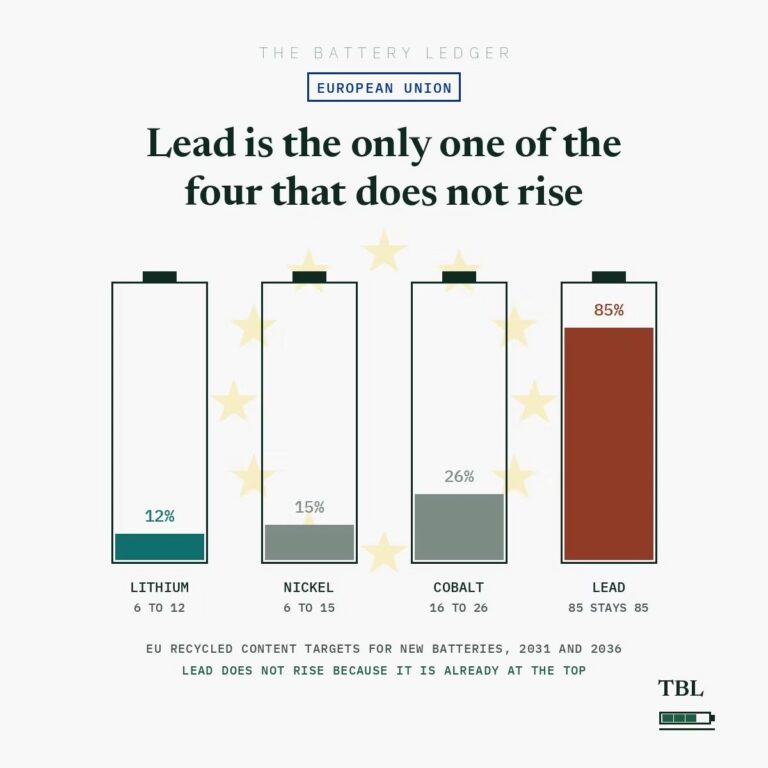
Lithium is set forty points below the other four metals in 2027 and fifteen below in 2031. That closing gap is the timetable the EU has set for lithium recovery to catch up.
The first targets apply on 31 December 2027. Minimum recovery of specific materials must reach the following.
The second tier arrives in 2031
Lithium is the outlier, and deliberately so
Lithium is set forty percentage points below the other four in the first tier, and fifteen below in the second. The four metals set at 90 per cent are recovered by established hydrometallurgical and pyrometallurgical routes. Lithium is the material that most often reports to slag or to a low-value fraction, and the lower target is an acknowledgement of that.
The gap closing from forty points to fifteen between 2027 and 2031 is, in effect, the timetable the EU has set for lithium recovery technology to catch up with the rest.
Not the same as recycling efficiency
Material recovery measures how much of a named element comes out of the process. Recycling efficiency measures the mass of the whole battery that is recycled, and it carries different figures on different dates.
See every other date in the EU Batteries Regulation Calendar.
Regulation (EU) 2023/1542, consolidated text, EUR-Lex
A summary for orientation, not legal advice.
Read next
All insights →


 Newest on The RegisterDr Francisco TrinidadFormer Director of Battery Technology, Exide · Alpha Beta SocietyRead the profile →