Australia’s Battery Ambitions Start With the Can and the Foil
Australia produces much of the aluminium and copper that go into a battery, yet, as CSIRO notes, the bulk of its critical minerals are exported. A new CSIRO study asks a narrower and more useful question than whether Australia should build a gigafactory: which battery parts could it realistically start making from what it already has? Its answer is two of the least glamorous components in a cell, the metal can and the copper foil.
On 4 November, CSIRO, Australia’s national science agency, published The future of Australian battery manufacturing: Cell cans and current collector foils. It compares what it takes to make these two components with what Australian industry can already do, and recommends where further study should begin.
The published document is a summary, dated September 2026, of a fuller technical report, EP2026-1973, completed on 25 May 2026, which CSIRO makes available on request. This article is based on the summary and CSIRO’s announcement; the full report was not consulted.
Why cans and foils
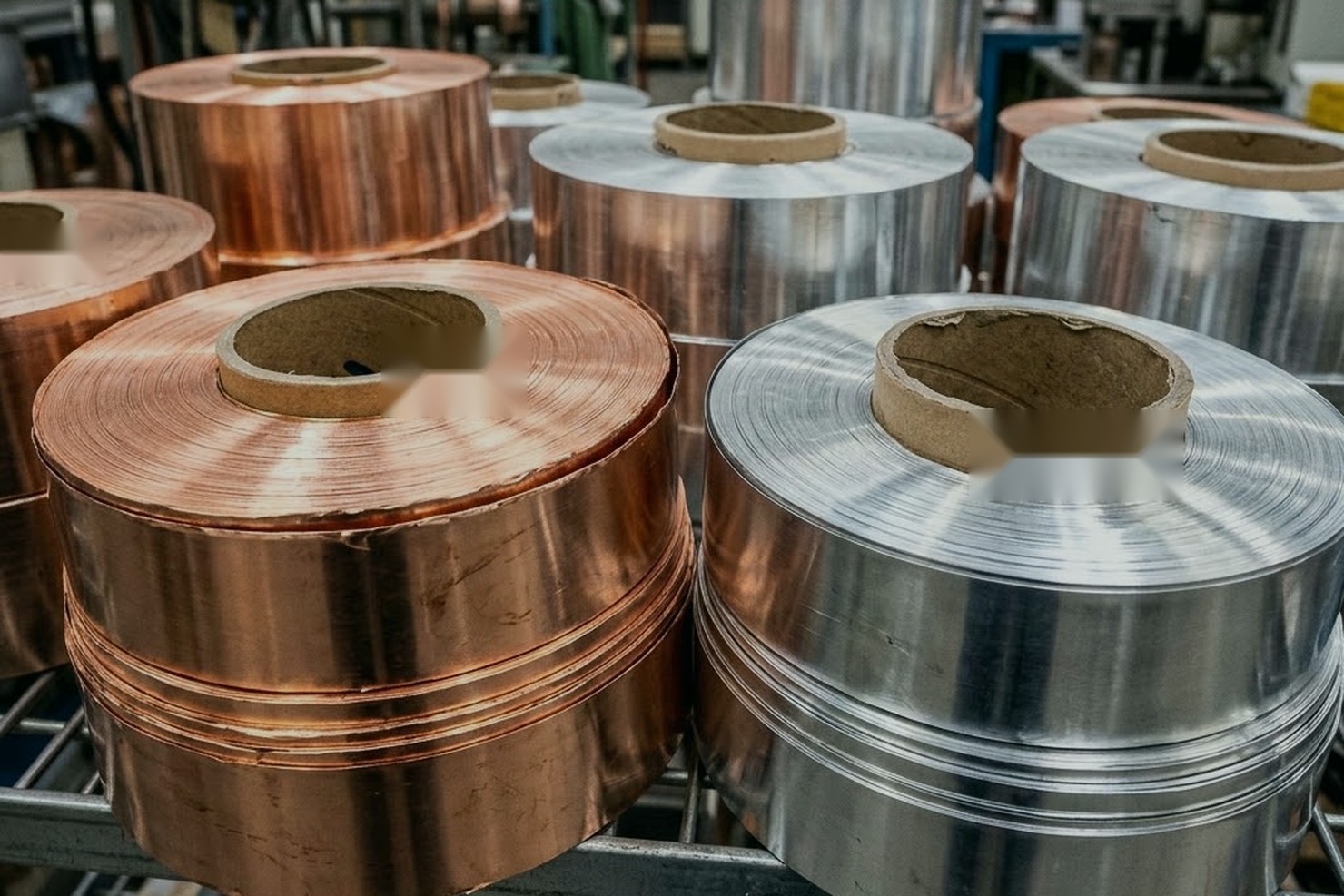
Every lithium-ion cell needs both. The can is the thin metal case that holds the cell’s active parts. CSIRO notes that, simple as it looks, it must withstand internal pressure changes and crash loads, remain compatible with the electrolyte, minimise weight and leave as much room as possible for energy storage, all at low cost. The foils are the thin sheets of copper and aluminium that support the electrode coatings and carry current to the terminals. CSIRO says the copper foil is typically about six microns thick and the aluminium about twice that.
The quantities are not trivial. In the report’s worked example, the battery pack of a Tesla Model 3, it puts the foil at around 335 square metres of copper and 312 square metres of aluminium.
The honest starting point
The report’s most useful feature is its candour about the gap between raw materials and battery-ready ones. Australia produces steel, aluminium and refined copper. In most cases, it does not produce them in the semi-finished forms that battery components require.
Australia makes deep-drawing grades of steel sheet, but not the nickel-plated sheet that cylindrical cell cans are typically made from. Its four smelters produce plentiful aluminium, but aluminium sheet and foil production ceased in 2014 when Alcoa closed its two rolling plants. Since 2025, one company has again rolled thicker aluminium sheet, to make slugs for its own aerosol cans. Three smelters produce electrical-grade copper cathode, but Australia does not make copper foil and no longer casts the copper slab used to roll it. Tinplate, a somewhat similar plated steel, was made locally from 1958 until 2007.
Filling those gaps directly would mean new rolling mills or plating lines. CSIRO describes these as capital-intensive, and judges that the quantities needed for batteries are unlikely to use a large share of a new commercial-sized rolling plant, risking underutilisation.
The can-making itself is a different matter. CSIRO concludes that the metal-working processes needed are almost certainly technically feasible in Australia, using commercially available turnkey equipment and existing local skills. The harder obstacle is supplying the input materials.
Two practical first steps
So the report looks for places where Australia already has both the input material and a closely related manufacturing skill. It identifies two, and recommends both for further study.
Prismatic cans, by impact extrusion
The first is making prismatic cell cans, the rectangular format, from Australian aluminium by impact extrusion. The input is aluminium slugs, blanked from rolled aluminium sheet. Australian companies already use impact extrusion to make millions of aluminium aerosol cans. Since 2025, Jamestrong Packaging in Taree, New South Wales, has made its own slugs from Australian aluminium, in a plant the report says reportedly cost A$6–8 million.
Those slugs go into Jamestrong’s own aerosol cans. The plant shows that the capability exists in Australia, not that anyone is supplying battery-can makers. Whether slugs would be available to other customers is, as the report notes, a commercial decision for the company.
CSIRO calls this one of the lower-risk opportunities and makes it its primary recommendation for cans. It would need two investments: a slug production facility like Jamestrong’s but tailored to prismatic cells, and an automated, high-volume line for extruding the cans themselves.
The route applies to prismatic cans only. CSIRO’s announcement says Australia could feasibly make cylindrical, prismatic or blade cans, but other pathways would require major investment in nickel-plated steel or aluminium sheet production.
Copper foil, by electrolytic deposition
The second is copper foil made by electrolytic deposition, in which the foil is deposited from a copper sulphate solution rather than rolled from slab. CSIRO identifies this as the first priority for foils, for three reasons. It needs a smaller investment than the rolling route. Its capacity can be expanded by adding deposition cells over time. And Australia has relevant experience: copper is electrorefined or electrowon at three sites, in Queensland and South Australia, using processes with considerable technical overlap.
The report suggests the ideal feedstock is scrap copper wire, stripped of insulation, and expects the Australian scrap industry should be able to provide substantial quantities, with new copper as a fallback. That remains to be shown, and the report recommends assessing the supply.
Nor does it treat the route as settled. Its recommendations call for a study to confirm that this kind of foil is the right material to target for current and future lithium-ion batteries, and for a scalable plant to be scoped and costed.
Aluminium foil comes second. CSIRO suggests domestic production would probably make most sense as part of a wider plan to make in Australia the full range of flat aluminium products the country now imports.
What it is, and what it is not
This is a capability study, not an investment plan. It does not set out a business case, identify customers, forecast demand or show that either route is commercially viable at scale, and CSIRO says plainly that further technical, commercial and market analysis is needed. On blade cells, for instance, it notes that the best-known maker, BYD, is vertically integrated and makes its own, so selling cans to BYD is unlikely. Any market for Australian blade cell cans would instead lie with other makers, such as Geely and SVOLT, or a future integrated Australian cell maker.
CSIRO is holding an online panel discussion on the findings on 24 November.
The Ledger
It is tempting to start a battery industry with the biggest prize. This study starts with the smallest sensible step, and that is its strength. Its most valuable pages are the ones that record what Australia stopped doing: rolling aluminium sheet and foil in 2014, plating steel in 2007. A plan that starts from those facts, and builds outward from aerosol cans and copper refining, is more likely to produce something real than one that starts from a factory. Cans and foil will not make headlines. They might make a beginning.
CSIRO, The future of Australian battery manufacturing: Cell cans and current collector foils, summary document, September 2026, by Geoffrey de Looze (capability assessment, materials and investment gaps, historical closures, Jamestrong Packaging, foil quantities, conclusions and recommendations). CSIRO news release, “Australia has the ingredients to build a local battery manufacturing sector”, 4 November 2026 (publication, exports, component descriptions, foil thickness, cell formats, online panel). The full report on which the summary is based, EP2026-1973 of 25 May 2026, is available from CSIRO on request and was not consulted.
Read next
All insights →


 Newest on The RegisterDr Francisco TrinidadFormer Director of Battery Technology, Exide · Alpha Beta SocietyRead the profile →