Washington Takes Aim at the Gap Between the Lab and the Factory
The United States has produced a remarkable share of the world’s battery breakthroughs. It has been less successful at manufacturing them. The gap between a promising result in a national laboratory and a working production line on American soil has swallowed more than one good idea, and more than one company. On 28 October, the Department of Energy announced a consortium built specifically to narrow it.
It is called the Battery Manufacturing Accelerator, or BattMan. Behind the name is a serious line-up: four national laboratories, led by the Pacific Northwest National Laboratory and joined by Argonne, Oak Ridge and the National Laboratory of the Rockies, together with universities and, in time, industry partners. Its stated purpose is refreshingly specific: lowering manufacturing costs, shortening development timelines, and getting new battery technologies out of the lab and into domestic production.
The problem it is built for
Anyone who follows the industry knows the pattern. A new chemistry performs beautifully in a cell. Then comes the hard part: making it a thousand times over, consistently, affordably, at a scale that a carmaker or a grid operator will actually buy. Scaling a new battery technology carries manufacturing and financial risk at every step, production can fall short, construction costs can climb, and financing can run dry before the first saleable cell is made.
BattMan’s premise is that much of this risk can be identified earlier. The consortium intends to test and validate manufacturing processes at increasing scales, exposing the problems that only appear when you try to make something in volume, before a company has sunk a fortune into a full-sized plant. Its near-term tools are practical: high-throughput experimentation, automated synthesis, and digital manufacturing techniques aimed at better data and more consistent processes. Its longer-term ambition is more striking: self-optimising manufacturing systems that use real-time data and digital twins, virtual models linked to the real line, to catch a defect as it forms and adjust the process on their own.
Much of this work will run through Oak Ridge’s Battery Manufacturing Facility, described as the country’s largest open-access battery manufacturing research centre.
More than process
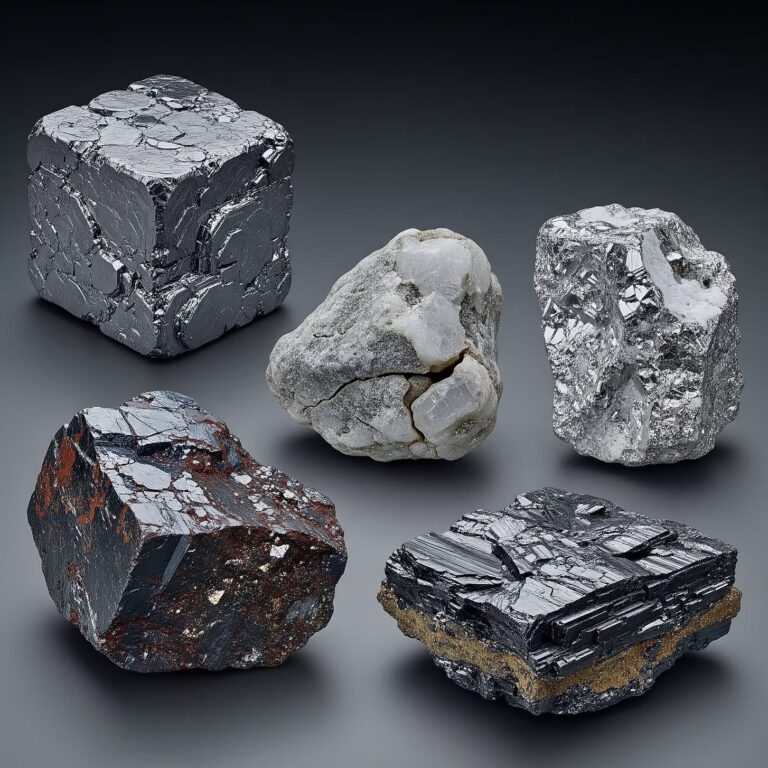
BattMan is not only about the production line. It also sets out to strengthen critical mineral supply chains, by advancing battery materials made from more abundant, domestically available elements. It is a direct response to a vulnerability the industry knows well: that even a well-made cell is exposed if its materials come from a single foreign source. Designing around abundant domestic materials from the start is a hedge against that.
And it leans heavily on computation, integrating advanced modelling and machine learning to speed the discovery of materials and the design of processes, using data to predict what will work before it is built. It is a technique the most advanced battery companies already use, now applied at national scale.
The timing, and the test
The announcement arrived days before the US midterm elections, and its politics will be read accordingly. But the underlying problem it addresses is neither new nor partisan. The lab-to-factory gap has frustrated American battery ambitions under administrations of both parties, and it is the same gap that has let other countries turn US research into their own manufacturing lead.
Whether a consortium can close it is the open question, and a fair one. Coordinating national laboratories, universities and companies around a shared manufacturing problem is a sensible, and overdue, approach. Its success will be measured not in the research it produces, but in something harder: whether, some years from now, there are cells being made in American factories that would not otherwise have been made there. On that, it deserves to be judged by results.
The Ledger
It has become a theme of this publication that the hardest part of a battery is rarely the idea. It is the manufacturing, the long, unforgiving middle between a breakthrough and a product people can buy. BattMan is a clear-eyed response to exactly that: a recognition that the science and the scale need to be joined up deliberately, and a serious attempt to do it. It is a sensible answer to a real problem. The measure of it, in time, will be counted not in consortia, but in cells.
The Department of Energy’s launch of the Battery Manufacturing Accelerator (BattMan) on 28 October 2026, led by Pacific Northwest National Laboratory with Argonne, Oak Ridge and the National Laboratory of the Rockies, from the national laboratories’ announcements (PNNL, Argonne, Oak Ridge, NLR) and contemporaneous reporting (R&D World, AZoM, CleanTechnica, The Register). BattMan’s stated aims (lowering manufacturing costs, shortening development timelines, de-risking scale-up through testing and validation, self-optimising systems and digital twins, and advancing materials from abundant domestic elements) and its use of Oak Ridge’s Battery Manufacturing Facility, as stated by the consortium and its member laboratories. Written from the public record.
Read next
All insights →


 Newest on The RegisterDr Francisco TrinidadFormer Director of Battery Technology, Exide · Alpha Beta SocietyRead the profile →