Volkswagen Takes the Time to Build St. Thomas Right
Volkswagen’s $7bn Canadian battery plant has moved its start to 2029. Construction continues, the capacity plans stand, and the company says it’s timing the factory to the technology and the market. A look at one of North America’s biggest battery bets.
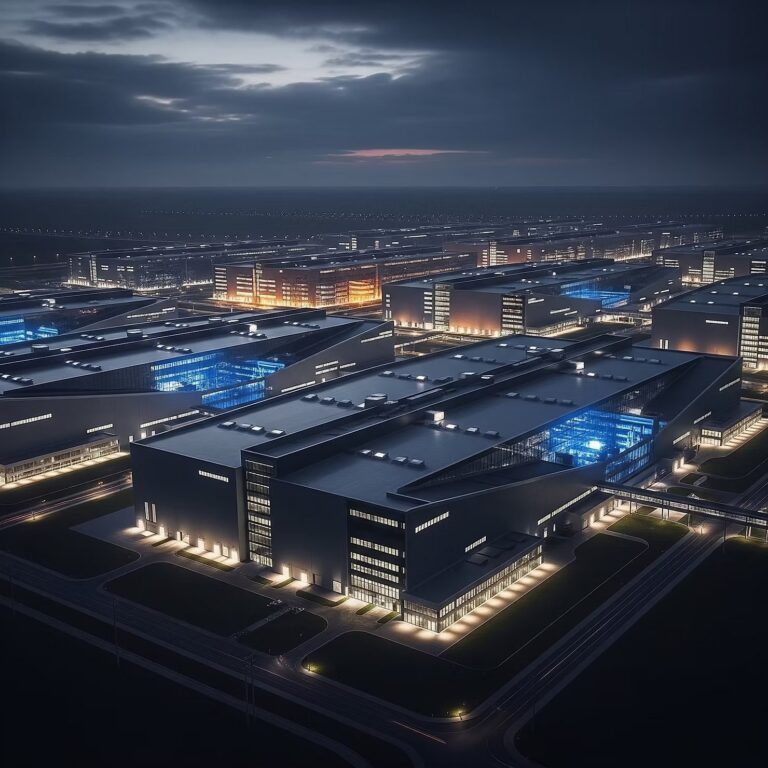
Volkswagen’s battery plant in St. Thomas, Ontario, has a new production date: 2029. Its subsidiary, PowerCo, announced the revised timeline on 24 September, and alongside it, the appointment of EllisDon as general contractor for the next phase of construction. The building, in other words, keeps going up.
What’s interesting isn’t the date so much as the reasoning behind it. PowerCo says it’s aligning the plant’s production, technology and capacity with where the market is actually heading, and leaving room for next-generation battery technology rather than locking in today’s. For a factory meant to run for decades, timing it to the better technology is a defensible call.
PowerCo put it directly. “PowerCo continues to view the project through a phased, demand-aligned approach,” said Tegan Versolatto, the company’s Senior Media Relations and Content Specialist. “Construction is continuing while production timing, technology and future scale are being aligned with evolving market demand and the Volkswagen Group’s long-term strategy. St. Thomas is expected to begin operations in 2029 to accommodate next-generation battery technology, while retaining flexibility to scale over time.”
A project built for scale
Announced in March 2023, St. Thomas is a roughly C$7 billion investment, designed to make lithium-ion cells for North America, with planned capacity of up to 90 GWh a year at full build, enough for around a million electric vehicles annually, and up to 3,000 direct jobs once operating.
Those ambitions still stand. PowerCo has been clear that the capacity plans are intact and that the revised schedule preserves flexibility to expand as demand grows. A later start is not a smaller plant; it’s the same plant, timed differently.
On capacity and jobs, PowerCo is clear that both will follow the plant’s progress. “As with any large industrial project,” Versolatto said, “future capacity and workforce growth will develop alongside market demand and the facility’s ramp-up.”
The funding is built to follow production
One detail worth understanding, because it’s often lost. Of the public support attached to the project, the headline figure, up to around C$13 billion under the 2023 Canada-Ontario agreement, is production-linked. It’s earned as cells are made and sold, modelled on the US Inflation Reduction Act’s manufacturing credits. On top of that sits C$500 million in direct federal incentives and regional infrastructure spending.
The significance: because the big number follows production, a later start defers it rather than wasting it. The structure was designed to pay for output, not promises, which means the public money and the plant’s success stay tied together, exactly as intended.
Taking the time the technology needs
A gigafactory is not just a building. Its economics rest on demand, chemistry, customers and the ability to ramp without losing money. Getting those right is worth more than hitting an early date with the wrong setup, and PowerCo’s framing, matching the plant to the market and to next-generation technology, reflects an industry that has learned how hard the ramp really is.
St. Thomas remains one of the most significant industrial investments in Canada’s push to build a domestic battery industry. The plant hasn’t been scaled back or cancelled; it’s been given room to arrive at the right moment, with the right technology, into a market ready for it.
The number everyone quotes is the $7bn. The one that will matter is the first cell off the line, and Volkswagen is taking the time to make sure that line is the right one.
PowerCo’s revised 2029 production date and the EllisDon appointment (24 September) from Electric Autonomy Canada and The Canadian Press via CityNews, with additional comment provided to The Battery Ledger by Tegan Versolatto, Senior Media Relations and Content Specialist, PowerCo Canada. Volkswagen Group’s original St. Thomas announcement (March 2023). Planned capacity (up to 90 GWh), the one-million-EV figure and up to 3,000 jobs from the original project announcements; these describe the project’s intended scale, not current output or employment. The Government of Canada’s C$500 million direct incentives and the Canada-Ontario production-linked support (up to approximately C$13 billion) from the 2023 federal and Ontario announcements. Written from the public record.
Read next
All insights →


 Newest on The RegisterDr Francisco TrinidadFormer Director of Battery Technology, Exide · Alpha Beta SocietyRead the profile →