The Silicon Producer That Backed Its Own Customer
Coreshell has raised $30 million to put cheap American silicon where the graphite usually goes. The round was co-led by Ferroglobe, the company that makes that silicon, and it is not the first time the supplier has backed its own customer. That is the more telling part of the story.
On 11 November, Coreshell Technologies, a battery company based in San Leandro, California, announced that it had closed a $30 million Series B. The round was co-led by Ferroglobe, a Nasdaq-listed producer of silicon metal, and Access Industries, a global investment firm, with participation from ADS, Helios Ventures, Pegasus Tech Ventures, Mana Ventures and Entrada Ventures. It follows Coreshell’s selection in August by the Department of Energy for a $50 million award to build manufacturing capacity.
A cheaper route to a silicon anode
Silicon has long been the anode material the industry wants and struggles to use. It can hold far more lithium than graphite, but it swells as it charges, and the strain cracks the electrode and shortens the life of the cell. The companies furthest along, such as Group14 and Sila, contain the problem with engineered silicon materials, and the forms of silicon they rely on are expensive to produce. Most commercial cells still use only a few per cent of silicon, added to graphite rather than replacing it, as we set out in October in a piece on where silicon anodes stand.
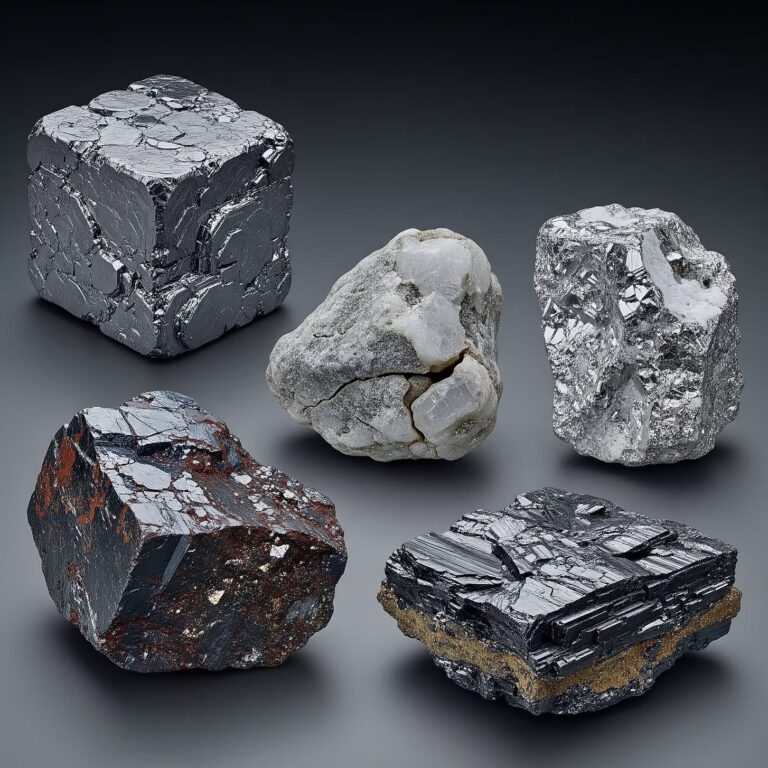
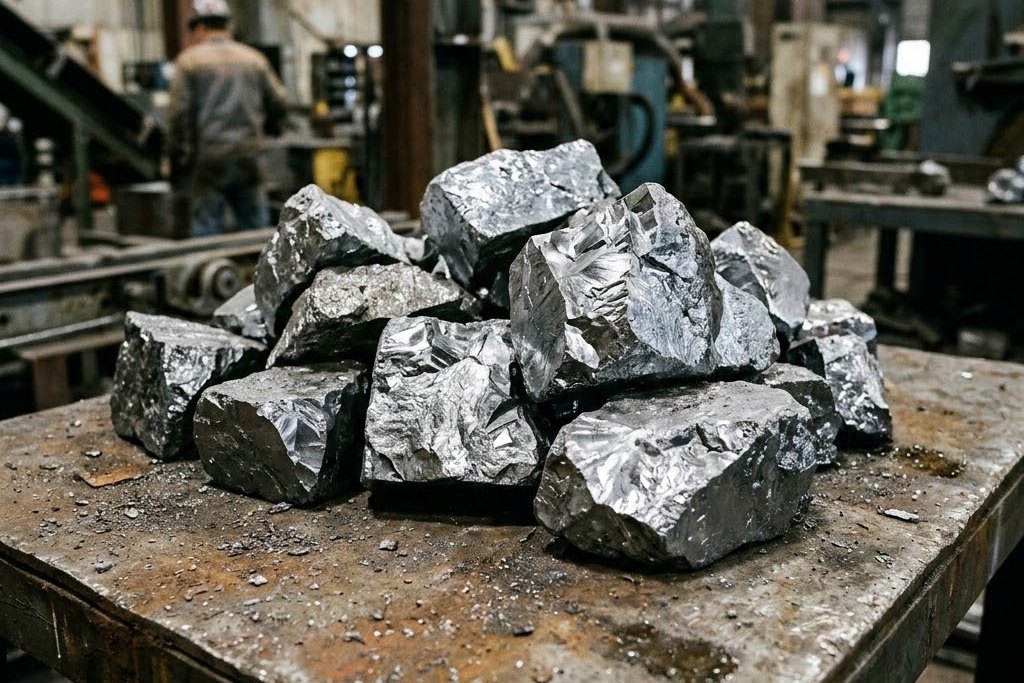
Coreshell takes a different route. It uses metallurgical silicon, a raw, commercially produced form of the metal, rather than the silane-based materials used in other silicon-anode cells, and coats the particles with its own material to keep them stable through repeated charging. The company says its anodes are made entirely of metallurgical silicon, with no graphite at all.
The approach has so far been proven at small scale. Coreshell made its first 60 amp-hour sample cells for carmakers in December 2024, and by March 2025 was running a four megawatt-hour production line to supply testing, the company told TechCrunch at the time. It says its cells deliver more than 30 per cent more range than conventional ones at up to 25 per cent lower cost. Those are the company’s own figures.
A supplier that keeps investing
Ferroglobe is not a new backer. In 2024 it signed a memorandum of understanding with Coreshell to develop metallurgical silicon suitable for electric vehicle batteries. In March 2025 it led Coreshell’s $24 million funding round, and TechCrunch reported that it was also Coreshell’s silicon supplier and could meet that supply entirely from its US operations. This month it co-led again.
That makes the round more interesting than its size. A raw material producer putting money into a customer twice is a statement about where it expects demand to come from. If Coreshell’s anode works at scale, every cell it makes is a new outlet for metallurgical silicon, and Ferroglobe gains a foothold in batteries without having to become a battery company.
For Coreshell, the arrangement brings capital and a partner that understands its key input. In its August announcement, Coreshell said domestic producers, Ferroglobe among them, already make more than 100,000 tons of metallurgical silicon a year. The arrangement also concentrates risk. The investor and the supplier are the same company, and neither announcement names another source.
The China-free claim
Coreshell’s pitch is as much about supply chains as chemistry. Graphite is the anode material in conventional lithium-ion cells, and Coreshell, citing a Pentagon figure, says more than 90 per cent of the world’s graphite is processed in China, which tightened controls on graphite exports in 2023. Benchmark Mineral Intelligence has put the Chinese share of graphite anode material at 99 per cent.
Coreshell’s answer is to remove graphite altogether. On the cathode side, it has an eight-year supply agreement with L&F, the South Korean cathode maker, which it says gives it long-term access to lithium. Together, the company says, these allow it to make batteries free of Chinese critical materials.
The defence angle is explicit. ADS, which Coreshell describes as the top supplier to the Defense Logistics Agency, joined the round as a strategic investor, and its Dave Bellis said the batteries powering uncrewed systems “cannot be a geopolitical liability”. Jonathan Tan, Coreshell’s chief executive and co-founder, argued that meeting sourcing requirements does not on its own make a battery supply chain secure.
That is a fair point, and it applies to Coreshell too. The China-free description is the company’s stated aim and design, not an independently verified property of its whole supply chain. Removing graphite and sourcing cathode material from Korea addresses two of the largest dependencies, but a cell contains other materials, and neither announcement sets out how the rest of the chain is checked.
What the money is for
The Series B is intended to scale manufacturing and customer programmes. The larger build is the federal project. In August, Coreshell said the Department of Energy’s Manufacturing Deployment Office had selected it for a $50 million award under the Infrastructure Investment and Jobs Act, to establish what it describes as the first US gigafactory for lithium-ion batteries with anodes made entirely of metallurgical silicon.
The plan is a joint one. AM Batteries, a Massachusetts company, will supply its dry-coating process for the cathode as a subrecipient, the same solvent-free principle behind Tesla’s dry electrode work. Together the two companies intend to build about 2 gigawatt-hours a year of electrode manufacturing capacity and 1.5 gigawatt-hours of cell assembly, creating more than 100 jobs.
What remains to be shown
Silicon anodes have a long record of announcements arriving ahead of volume production, and Coreshell has yet to show its cells at gigawatt-hour scale. Neither announcement names a customer. In March 2025, Tan said he hoped to sign agreements with major carmakers within the following year; the Series B announcement describes a broader market, across defence, automotive, data centres and other industries. The performance and cost figures are the company’s own, and the gigafactory is a plan backed by a federal award, not yet a running plant.
The Ledger
Supply relationships in batteries usually run one way. The cell maker shops for materials and the producer waits for the order. Ferroglobe has twice chosen not to wait, and by investing in Coreshell it is helping to create demand for its own product. Coreshell, in turn, has something most battery start-ups lack: an upstream partner with its own reason to want it to succeed. That alignment is real, and so is the concentration that comes with it, because the investor, the supplier and the strategic bet are the same company. The test now is the one that has slowed silicon before: whether cells made from cheap American metal can be built at scale and sold to buyers who are not also shareholders. The answer will come from the factory floor, not the funding round.
Coreshell Technologies, press release, 11 November 2026 (Series B terms and investors, use of funds, graphite processing figure and 2023 export controls, L&F agreement, China-free framing, ADS description and quotation, Jonathan Tan’s statement). Coreshell Technologies, press release, 24 August 2026 (Department of Energy selection, award amount and programme, gigafactory plan, AM Batteries, capacity, jobs, domestic metallurgical silicon output). Coreshell Technologies, announcement of L&F supply agreement, 2026 (eight-year term). Heatmap News, 11 November 2026 (Access Industries, ADS as a new strategic investor, Ferroglobe as an existing investor). TechCrunch, 18 March 2025 (Ferroglobe-led $24 million round, Ferroglobe as supplier and its US supply, sample cells, production line, carmaker timetable, Benchmark Mineral Intelligence figure). Coreshell Technologies, press release, March 2025 (range and cost claims). Ferroglobe, investor materials (2024 memorandum of understanding). The Benchmark Mineral Intelligence figure is as reported by TechCrunch; the original was not consulted.
Read next
All insights →
 Newest on The RegisterDr Francisco TrinidadFormer Director of Battery Technology, Exide · Alpha Beta SocietyRead the profile →