Veolia Opens a European Home for Battery Metals
Veolia has launched a plant in France’s Grand Est region that treats black mass from spent electric vehicle batteries, recovering more than 90 per cent of the cobalt, nickel and copper it contains. It is built on a simple idea: Europe’s battery metals should be recovered in Europe.
Veolia has launched a site in France’s Grand Est region for extracting strategic metals from electric vehicle batteries. Estelle Brachlianoff, Veolia’s chief executive, opened it with Stéphane Séjourné, the European Commission’s executive vice-president for prosperity and industrial strategy. Franck Leroy, president of the Grand Est region, also attended.
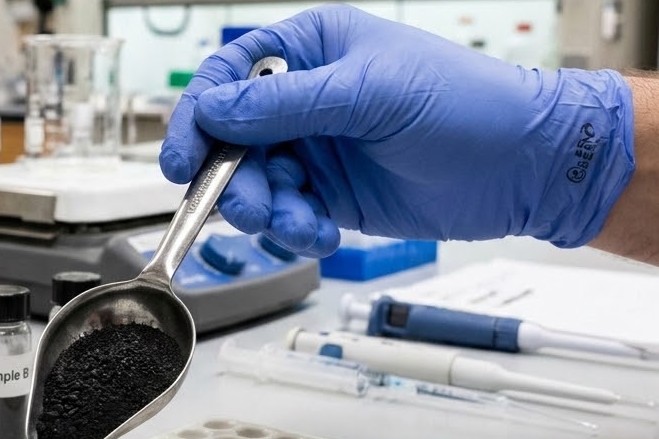
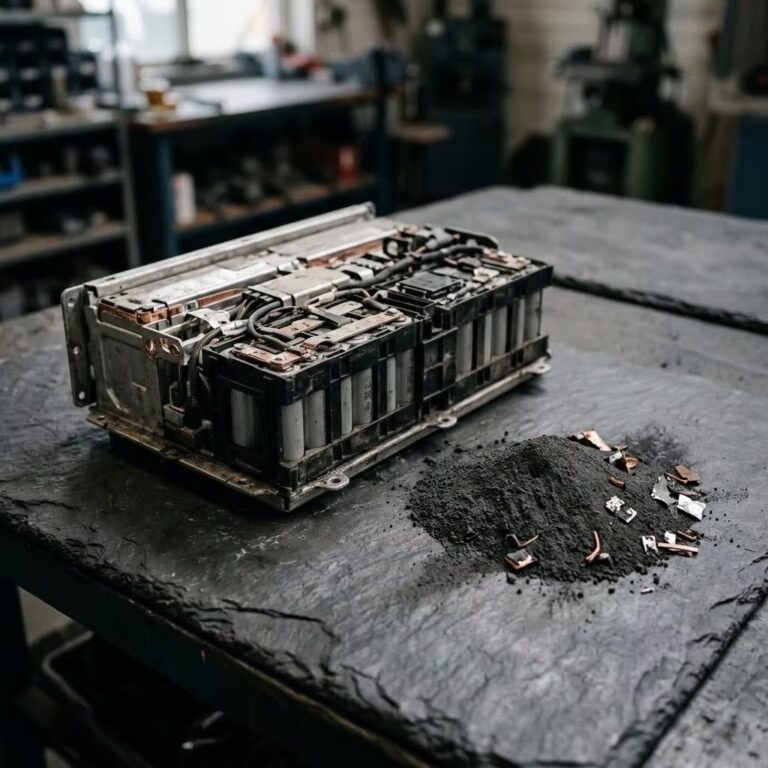
The plant treats black mass, the dark powder produced when spent batteries are shredded. Using Veolia’s own hydrometallurgical technology, it recovers more than 90 per cent of the cobalt, nickel and copper that the black mass contains. It can process nearly 7,000 tonnes of black mass a year, equivalent to 20,000 tonnes of batteries.
How it works
The plant works on black mass, not on whole batteries. Shredding and separating spent batteries is an upstream step. The black mass then arrives at the site from France, the United Kingdom and Switzerland, and Veolia’s proprietary hydrometallurgy extracts the cobalt, nickel and copper from it. The recovered metals go back into European automotive, construction and defence markets.
Veolia is also building up the upstream end of the chain, with battery-dismantling projects under way in the United Kingdom, Belgium and Slovenia that complement the work of this downstream plant. It builds on long experience in the region. Veolia has worked for years on battery dismantling, mechanical pre-treatment and hydrometallurgical recycling of strategic metals at its sites in Dieuze and Amnéville.
Why it matters
Veolia’s case is about where Europe’s battery metals end up. It says competition from outside Europe is currently sending large volumes of European black mass to Asia. At the same time, it expects nearly 700,000 tonnes of batteries to be recycled in Europe within five years, holding more than €1 billion of recoverable metals. A plant that processes that material locally keeps the value, and the metals, inside Europe.
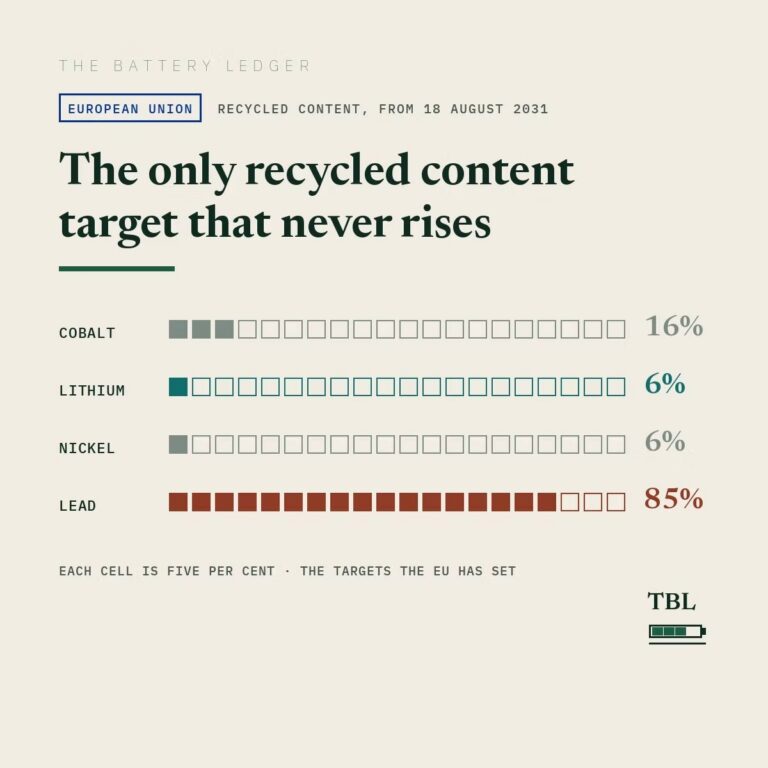
The EU Batteries Regulation requires recyclers to recover 90 per cent of cobalt, copper and nickel from 2027, rising to 95 per cent from 2031. The regulation measures recovery across the whole recycling chain, but Veolia’s figure for the black mass stage is in step with that standard.
Séjourné described the plant as Europe’s industrial shift in practice: safeguarding resources, supporting manufacturers and making European preference a reality. The Grand Est region said it had supported the project from day one.
What comes next
Veolia is clear that the loop is not yet closed. Brachlianoff said the recovered metals would serve Europe’s metallurgy sector “today” and, “tomorrow perhaps,” new European batteries. Veolia sees that “battery to battery” step coming in time, with the support of the authorities. It is calling for a Europe-wide regulatory and economic framework to help bring in plants that can take recycled metals back into production.
The Ledger
Europe has spent years debating how to secure its supply of battery metals. Much of the answer is already in its scrapyards, in batteries that have reached the end of their lives. Veolia’s plant puts that resource to work at home rather than sending it abroad, with a recovery rate in step with the standard Europe has set. The next step, turning recovered metals into new European batteries, depends on a market and a framework that do not yet fully exist. Veolia has built its part of the chain, and it is now making the case for the rest.
Veolia press release, 12 November 2026, in French and English (capacity, recovery rate, feedstock, process, end markets, European battery volumes, dismantling projects, quotations, call for a framework). Veolia, MovinOn article (experience at Dieuze and Amnéville). Veolia, Li-ion battery recycling brochure, 2026 (EU recovery targets, as stated in Regulation (EU) 2023/1542).
Read next
All insights →
 Newest on The RegisterDr Francisco TrinidadFormer Director of Battery Technology, Exide · Alpha Beta SocietyRead the profile →