The Most Recycled Product In America Is Not A Bottle Or A Can. It Is A Battery
A 99 percent recycling rate, a closed loop built six decades ago, and a critical mineral designation that changes what the whole system is for.
Sources: the US Environmental Protection Agency (EPA), the US Geological Survey (USGS), and Battery Council International (BCI), whose figures are identified throughout as industry-body figures and distinguished from the federal record.
Ask most people to name the most recycled everyday product in the United States and they will guess aluminium cans, or plastic bottles, or paper. They will be wrong, and not by a little. According to the US Environmental Protection Agency, the answer is the humble lead battery, recycled at a rate of around 99 percent, higher than any other product in the country. In a decade spent trying to build a circular economy for batteries, it is worth noticing that one chemistry built a working one generations ago.
Last updated: August 2026
The Number, And Where It Comes From
The headline figure is striking enough to warrant care about its source, and the good news is that it does not rest on industry marketing. The EPA, the federal environmental regulator, states plainly that the United States recycles lead-acid batteries the most out of all products, at 99 percent each year. The agency draws that figure from its own Advancing Sustainable Materials Management fact sheet for 2018, so it is a federal number, and it is a number with some years on it.
The more current picture comes from the industry itself, and it comes with its arithmetic attached. Battery Council International, the trade association for the battery manufacturing and recycling industry, has measured the rate through its recycling rate study since 1990. The latest edition, prepared by Vault Consulting and published in July 2026, covers 2020 to 2024. It reports that US recyclers recovered more than 11 billion pounds of battery lead over those five years, a recycling rate of 97.7 percent, and it puts the long-term rate, measured as a ten-year average, above 99 percent.
What is unusual is how much of the working the study shows. It publishes the full worksheet, line by line, with a footnote identifying the source of every input. The rate is a single ratio: lead recovered, divided by lead available for recycling in the United States. The numerator is 11.05 billion pounds, weighed across ten secondary smelters. The denominator, 11.31 billion pounds, is built from 18.2 billion pounds of lead reaching end of life, plus 0.24 billion pounds of scrap imported for domestic reprocessing, less 7.14 billion pounds of spent battery lead exported for smelting abroad. Lead recycled in Canada or Mexico is still recycled, but it is not available to the domestic system the study is measuring, so it comes out.
Two methodological choices in this edition are worth flagging, because trade bodies are not generally in the habit of making their own numbers harder to produce. The first is that BCI retired the fleet aging model it had used for passenger car, light truck and heavy-duty batteries for most of the study’s history. That model assumed batteries retired a fixed number of years after they shipped, an assumption the pandemic, the shift to light trucks and the spread of stop-start and AGM formats had all quietly undermined. For those categories, which are roughly two-thirds of the domestic pool, the denominator is now assembled from two observable streams instead: replacement sales, and vehicle scrappage.
The second is the treatment of scrap exports, the single largest line in the worksheet after automotive batteries themselves. BCI does not take that figure from tariff classifications, because US export classification of spent lead batteries has been inconsistent between the two applicable codes and is known to under-report volume. It uses Bureau of Transportation Statistics tonnage as the primary series instead, checked against Commerce data and international trade databases. Choosing the source that produces the larger deduction, and therefore the smaller rate, is not the behaviour of a study written to flatter.
The study also declines to claim more precision than it has. It reports one decimal place, states that the figure is an estimate, and says explicitly that its components should not be used to derive a rate for a single year or a single battery type.
Why Lead Recycles So Well
The rate is not an accident of good intentions. It is a product of design and structure, and the EPA’s own case study on the network sets out why.
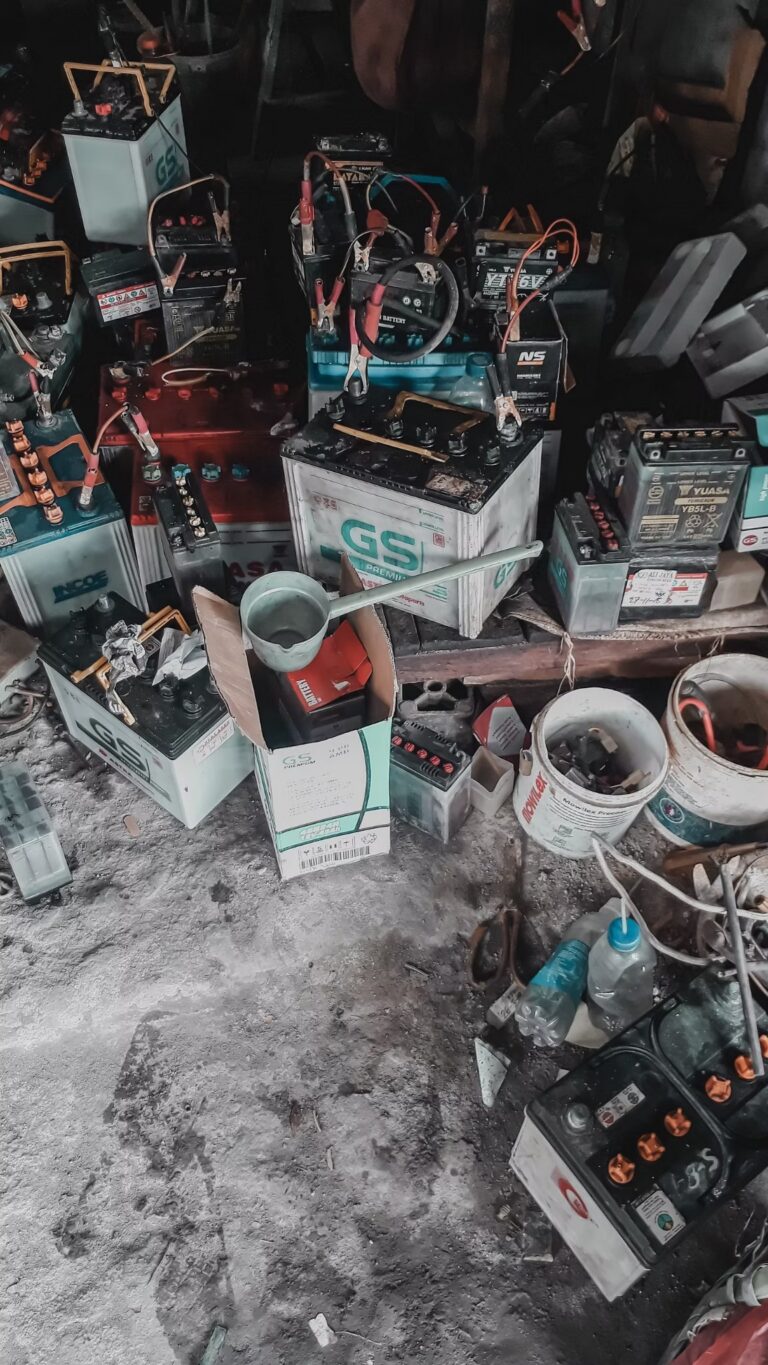
The collection system is the heart of it. The EPA describes an industry-led network that has operated nationally since the 1960s, with drop-off points at retailers, car dealerships and municipal household hazardous waste sites. Crucially, and unlike small consumer electronics that sit in a drawer for years, vehicle lead batteries are typically not handled by consumers at all. Retailers and dealers manage collection. When you buy a new car battery, the old one goes back at the point of sale, and the core charge you paid as a deposit comes back with it.
That structure has both a legal spine and a commercial one. The EPA credits state-level disposal bans, refundable core charges of five to twenty dollars, and industry partnerships. The model legislation behind those state laws was drafted by BCI in 1989, and forty-five states have since enacted laws based on it. The network itself is industry-funded, built on commercial agreements between recyclers, manufacturers and retailers, which is why it has kept running for six decades without a federal programme to sustain it.
Then there is the material. A lead battery’s three main components, lead, plastic and acid, are recoverable, and BCI states that the lead can be recycled indefinitely without loss of performance. The result, according to a 2025 BCI study the EPA cites, is that new US-made lead batteries contain over 80 percent recycled material. The industry is, to an unusual degree, its own supplier.
Why This Matters More In 2026
For years this was an environmental success story. In 2026 it became a strategic one.
On 7 November 2025, the USGS published the final 2025 List of Critical Minerals, adding ten minerals to the 2022 list. Lead was one of them. That designation reframes what the recycling network is. A system that recovers nearly all of the country’s available end-of-life lead is no longer just good for landfills. It is a domestic source of a material the federal government now treats as strategically important.
The supply picture makes the point sharper. USGS records that the last domestic primary lead smelter closed at the end of 2013, and that lead concentrates mined in the United States have been exported for smelting ever since. There is no primary route. BCI puts domestic recycling streams at roughly 70 percent of annual US lead demand, rising above 83 percent of regional demand once Canadian and Mexican recyclers are counted. Recycling is not a supplement to the domestic supply of lead. It is the domestic supply of lead.
BCI’s own framing of this is notably restrained. Rather than claiming the problem is solved, it presents the industry as a proven model for critical mineral recovery at a moment when the country is trying to build one for other materials, and points to the part that is not finished.
What The Sources Do Not Establish
A few honest limits keep this accurate.
The 99 percent figure is a US figure. Recycling rates for lead batteries vary widely by country, and the informal, unsafe recycling of lead batteries in parts of the world is a real and serious problem that a US success story does not erase. BCI has taken a position on this since a 1999 board resolution opposing exports of used batteries to facilities outside the USMCA countries known or suspected to use environmentally unsound practices, and its Lead Battery 360 certification programme, launched in 2022, now covers ten participating facilities. That is a policy stance and a certification scheme, not a measurement of outcomes abroad.
Nor is a high recycling rate the same as zero environmental impact. Lead is toxic. The EPA notes that pyrometallurgical recycling, the most common method, releases airborne lead particles if emissions controls are inadequate, and that US recyclers operate under strict permitting requirements. The number is impressive precisely because of the regulated infrastructure behind it, not in spite of it.
There is also the gap. BCI does not round it away: it names the missing 2 percent, attributes it in part to unreported or potentially illicit exports of scrap batteries, and describes closing it as the industry’s current task. Where those batteries end up is, by definition, not something the study can measure.
Finally, claims that lead is “the most sustainable battery” come from industry bodies and are comparative marketing as much as measurement. The federally backed claim is the narrower one about recycling rate, and it does not need the help.
The Ledger
The following is Battery Ledger analysis. The facts above are sourced as cited; the readings drawn from them are our own.
Lead already is the circular economy the rest of the industry is chasing. The lithium recycling sector, with its heavy investment and its insolvencies, is trying to build something lead achieved decades ago: a closed loop where end-of-life batteries reliably become new ones. On our reading, the most useful way to see the 99 percent figure is as a benchmark. A battery circular economy is possible at scale, because one already exists.
The lesson is in the collection system, not the chemistry. Our view is that what makes lead recycling work is not something mystical about the metal. It is the take-back structure, the old battery going back when the new one is bought, and the fact that nobody has to remember to do anything. That is a design and logistics lesson the newer chemistries can learn from, and the EPA has explicitly framed the network as a model for them. The chemistry is recyclable. The system is what makes it recycled.
The transparency is the underrated asset. Trade associations are not usually judged on their footnotes, but this one should be. Publishing the worksheet, retiring a methodology that had become flattering, and choosing the export data series that lowers your own headline are the moves of a body that expects to be checked. In a sector where a great many recycling percentages circulate with no visible arithmetic behind them, that is worth more to the industry’s credibility than a rounder number would have been.
The critical-mineral designation changes the politics of lead. With lead on the USGS list and no primary smelting to fall back on, the industry has a stronger and more strategic story than “we are clean”. It can credibly say it is already doing what the country wants done for other materials. That is a more powerful position than the industry has occupied in years.
Key Takeaways
- The EPA states that lead-acid batteries are the most recycled product in the United States, at about 99 percent each year, drawing on its 2018 Advancing Sustainable Materials Management fact sheet.
- BCI’s 2026 recycling rate study reports 11.05 billion pounds of battery lead recovered over 2020 to 2024, a rate of 97.7 percent, with the ten-year average above 99 percent.
- That study publishes its full worksheet and footnotes, retired a long-standing methodology that had become unreliable, and uses the scrap export series that produces the larger deduction from its own rate.
- The high rate is driven by recoverable materials and by an industry-led take-back system operating since the 1960s, underpinned by state disposal bans and refundable core charges.
- On 7 November 2025 the USGS added lead to the critical minerals list. With the last primary lead smelter closed since 2013, the recycling network is the domestic supply.
Key Figures
The claim that lead-acid batteries are the most recycled product in the US, at about 99 percent, and the description of the collection network, the core charge mechanism and the recycling method are from the EPA’s lead-acid battery collection network case study and the 2018 Advancing Sustainable Materials Management fact sheet it cites. The 2020 to 2024 recovery figures, the 97.7 percent rate, the worksheet components, the methodology changes and the recycled-content share are from Battery Council International’s US Recycling Rate Study, published July 2026 and prepared by Vault Consulting, and are identified in the text as industry-body figures. The addition of lead to the critical minerals list is from the final 2025 List of Critical Minerals, published in the Federal Register on 7 November 2025. The closure of the last domestic primary lead smelter at the end of 2013 is from USGS Mineral Commodity Summaries 2026.
Read next
All insights →
 Newest on The RegisterDr Francisco TrinidadFormer Director of Battery Technology, Exide · Alpha Beta SocietyRead the profile →