Spain Joins the Backers of Gore Street’s European Battery Fund
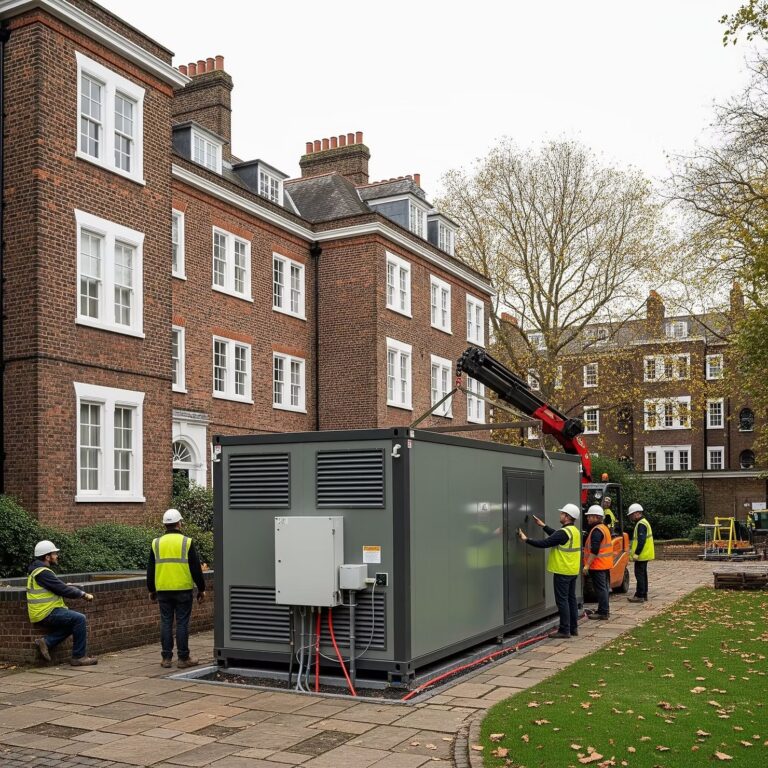
Photo: Gore Street Capital
Gore Street’s EU storage fund has completed its second close, adding the Kingdom of Spain to an investor group that already includes the European Investment Fund and Ireland’s Strategic Investment Fund. With €147 million committed across Ireland and Poland, its next stops are Spain and Romania.
Gore Street Capital has completed the second close of GS EU Fund SCSp, its fund for battery energy storage across the European Union, and is targeting a final close in the first half of 2027. The headline addition is a sovereign one. The Kingdom of Spain committed at the second close through the C&I Instrument under its National Recovery and Resilience Plan, alongside further support from private capital. It joins the fund’s cornerstone investors: the European Investment Fund, and the National Treasury Management Agency as controller and manager of the Ireland Strategic Investment Fund.
That makes for an unusual line-up. A European Union fund, an Irish state investor and now the Spanish government are backing a specialist manager to buy, build and run batteries across the EU. Gore Street’s chief executive, Alex O’Cinneide, said the close reflected support for the firm’s ability to deliver storage at scale, and that the capital was already going “where storage is needed most in Ireland and Poland”.
Where the money is going
To date the fund has committed €147 million across 550 MWh of storage: two assets in the Republic of Ireland, acquired in August 2026, and one in Poland, signed in September 2026. That figure is the fund’s investment in projects, not the amount raised from investors; Gore Street has not disclosed the size of the second close.
The Irish pair came first. Kilmannock, at 120 MW and 240 MWh, and Mucklagh, at 75 MW and 150 MWh, are ready-to-build standalone battery projects. Both have secured grid connections, land rights and planning permission. Kilmannock is expected to begin commercial operation in the first quarter of 2028, with Mucklagh following in the second. They start as two-hour systems, with the potential to be extended to four hours over their lives. Both were bought from Gore Street Energy Storage Fund, the firm’s listed fund. Because the same manager runs both funds, the deals were conducted at arm’s length, under strict information barriers and with independent third-party verification of valuations.
Poland followed in September with the Wolborz project. It is a 40 MW, 160 MWh battery designed as a four-hour system, and has secured a 17-year capacity market contract starting in 2030. It is scheduled to begin operating in the first quarter of 2028. Gore Street describes the contract as a foundation of contracted revenue that still leaves exposure to ancillary services and wholesale trading.
Why these markets
Gore Street has been open about its reasoning. On Ireland, O’Cinneide said the market stood out after screening multiple opportunities, for its attractive entry pricing, robust support for two-hour assets and one of the highest levels of renewable penetration in Europe. The firm also points to Ireland’s target of more than 80 per cent renewable penetration by 2030, policy support for longer-duration storage, and rising energy demand from data centres. That last point is well founded. Ireland’s Central Statistics Office reports that data centres used 23 per cent of the country’s metered electricity in 2025, up from 5 per cent in 2015. Gore Street also knows the ground. It already operates 130 MW across three projects in the Republic of Ireland.
On Poland, the firm cites growing renewable deployment, rising electricity demand and the need for grid flexibility as the country moves away from its ageing thermal fleet. Alicja Kowalewska-Montfort, a managing director at Gore Street, said the firm is already building relationships with local contractors as it strengthens its presence there.
What comes next
The fund is progressing a further 255 MWh of advanced-stage opportunities, with more acquisitions expected before year-end. In September, Gore Street put its wider pipeline at more than 2.3 GWh across six countries, against a target fund size of €500 million. Spain and Romania are named as the next markets, and the new Spanish commitment makes the first of those a natural fit.
The Ledger
Storage funds are usually backed by private capital. This one has drawn public investors from the European Union, Ireland and Spain into a single vehicle, and that says something about how governments now see batteries: as infrastructure they need, not just an asset class to watch. Gore Street has put the money into projects that are ready to build, with grid connections secured and, in Poland, a long-term contract in hand. The next chapter is construction, with all three projects due to operate in 2028. If they arrive on schedule, Gore Street will have shown that a specialist manager can turn sovereign backing into working storage across Europe.
Gore Street Capital press releases: 12 November 2026 (second close, investors, commitments, pipeline, final close timing, quotation); 24 September 2026 (Wolborz project, capacity contract, duration, operation date, pipeline, fund target, quotation); 24 August 2026 (Irish acquisitions, project status, operation dates, transaction process, market rationale, quotation); 22 January 2026 (first close). Central Statistics Office, Data Centres Metered Electricity Consumption 2025, 7 July 2026.
Read next
All insights →


 Newest on The RegisterDr Francisco TrinidadFormer Director of Battery Technology, Exide · Alpha Beta SocietyRead the profile →