Salt Vault: Sodium-Ion Moves Into the AI Data Centre
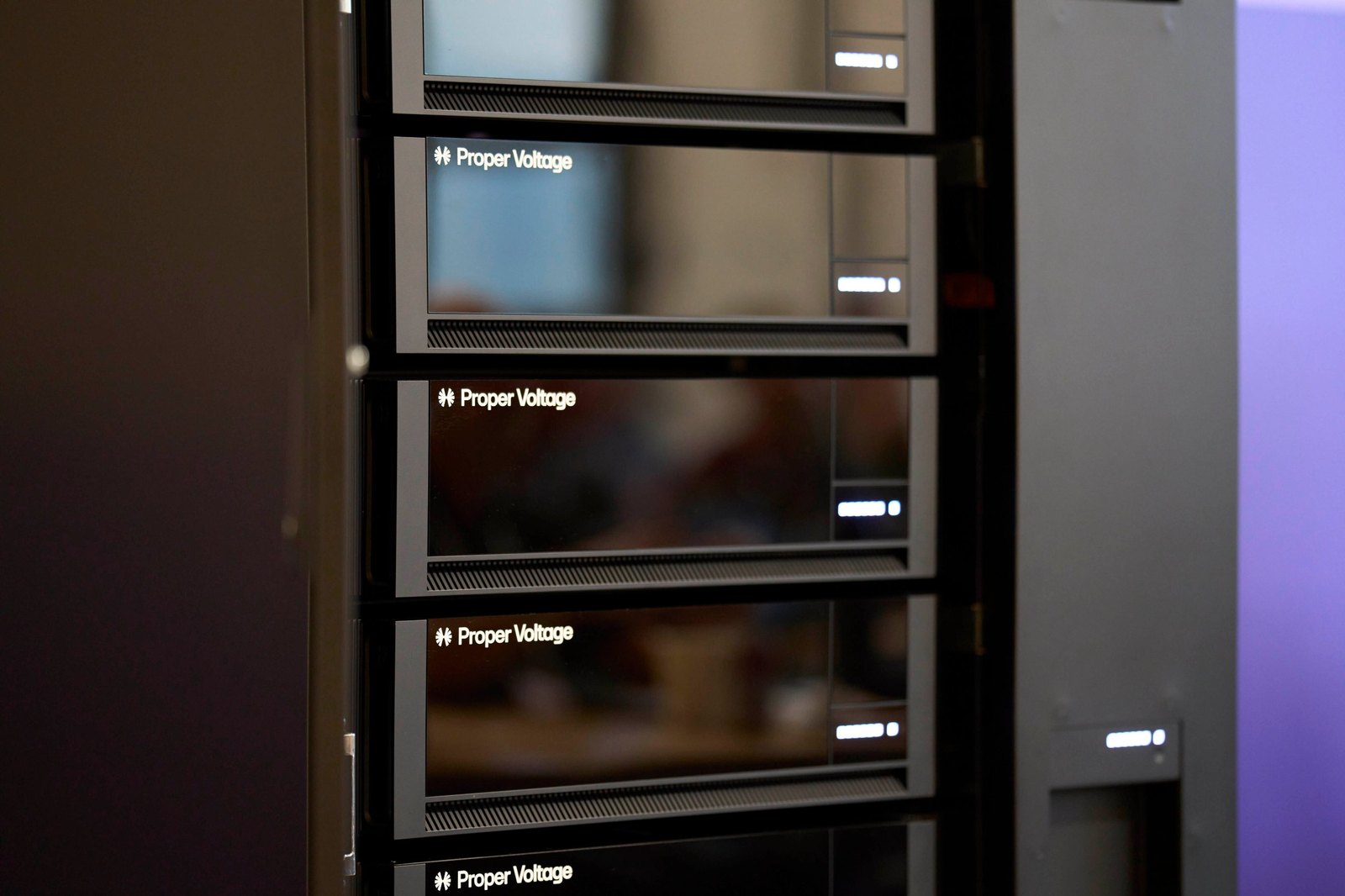
Proper Voltage’s Salt Vault UPS battery system, built on UNIGRID sodium-ion cells. Photo: Proper Voltage
Every AI data centre has a battery it hopes never to use. The backup cabinets that stand between a flicker on the grid and a lost training run have long been filled with lead-acid and, more recently, lithium iron phosphate. On 19 November, two California companies put a new option on the order book: sodium.
Proper Voltage, a battery technology company based in Carlsbad, has launched Salt Vault, an uninterruptible power supply (UPS) battery system for data centres built on sodium-ion cells from UNIGRID of San Diego. The cabinet pairs UNIGRID’s sodium chromium oxide (NCO) cells with Proper Voltage’s own battery operating system, bOS. The companies say it is designed to fit into existing data centre UPS systems without a redesign, and to adapt to newer 800V architectures.
Built for the AI load
AI training and inference can create rapid changes in electrical demand. Proper Voltage says Salt Vault is designed to handle the high-power pulses and repeated cycling these conditions can place on backup power systems.
Its published specifications for the Salt Vault 480VDC cabinet give 73 kWh of capacity, 333 kW of power and a nominal voltage of 522V DC, with a cycle life of 10,000 cycles at standard charge and discharge currents. That is a lot of power from a modest store of energy, which is exactly the job of a UPS battery: to deliver a great deal, quickly, when it is needed. The companies also claim higher power density than legacy LFP systems, strong resistance to thermal propagation, reduced cooling needs and a lower total cost of ownership.
The product was shaped by the people who will use it. Charlie Welch, chief executive and co-founder of Proper Voltage, said the company had spent “the last year and a half on the ground with datacenter operators, learning what matters most to them.” He added that performance “is what drives the best models”, and that the battery behind them must be resilient and adaptive.
The chemistry behind it
UNIGRID was founded in 2021 as a spin-off from the University of California, San Diego, growing out of the PhD research of Dr Darren H. S. Tan and Dr Erik A. Wu, and it has passed two significant milestones this year. In January, it began commercial-volume international shipments of its cells, which it describes as the first commercial-scale sodium-ion exports by a battery company outside China. Its cells are produced by manufacturing partners, so it does not need to build gigafactories of its own.
In August, UNIGRID announced that its NCO chemistry had completed technology validation through Hyundai Motor Group’s ZER01NE Accelerator programme. It reported that the cells passed safety abuse tests with no fire and no thermal propagation, showed minimal capacity loss under sustained cycling at full depth of discharge, and operated from –20°C to 60°C. Jongguk Bae, Senior Manager in the group’s Green Factory Development Team, said the chemistry is “well positioned to meet the high safety and performance criteria” of its upcoming energy initiatives, and Hyundai and its Korean integration partners now plan to develop a sodium-ion storage system for the group’s production facilities.
Tan, UNIGRID’s chief executive, said the chemistry was designed for high pulse power, long cycle life and thermal stability, and that the company was “excited to see our cells transform into a world-class enterprise UPS solution.”
Orders open now
Proper Voltage expects to begin commercial deliveries in April 2027, starting with strategic early-adopter data centre and critical infrastructure partners, and orders are open now.
It is the latest sign of where batteries are finding new work. Data centres have become one of the industry’s most important new customers, as we explored in The battery’s biggest new customer doesn’t drive, and sodium-ion has spent 2026 moving from the lab into production, as we covered in Sodium-ion stopped being a promise this year.
The Ledger
Backup power is one of the most conservative corners of a data centre. Operators change it carefully, and only when something new works with the infrastructure already in place. That may make Salt Vault’s integration as important as its chemistry. UNIGRID brings sodium-ion cells that have entered commercial international shipment and been through Hyundai’s technology validation. Proper Voltage brings the voltage control and operating system that lets them work with the UPS systems already on the floor.
The first deliveries next April will be the moment to watch. A battery built to stand ready, rather than run all day, may turn out to be one of sodium-ion’s most natural jobs, and if Salt Vault delivers on its promise, the AI boom could have sodium standing behind it.
Read next
All insights Photos and logo: Sila
 Illustration: The Battery Ledger
 Photo: UKBIC
More from The Battery Ledger
Swipe for more →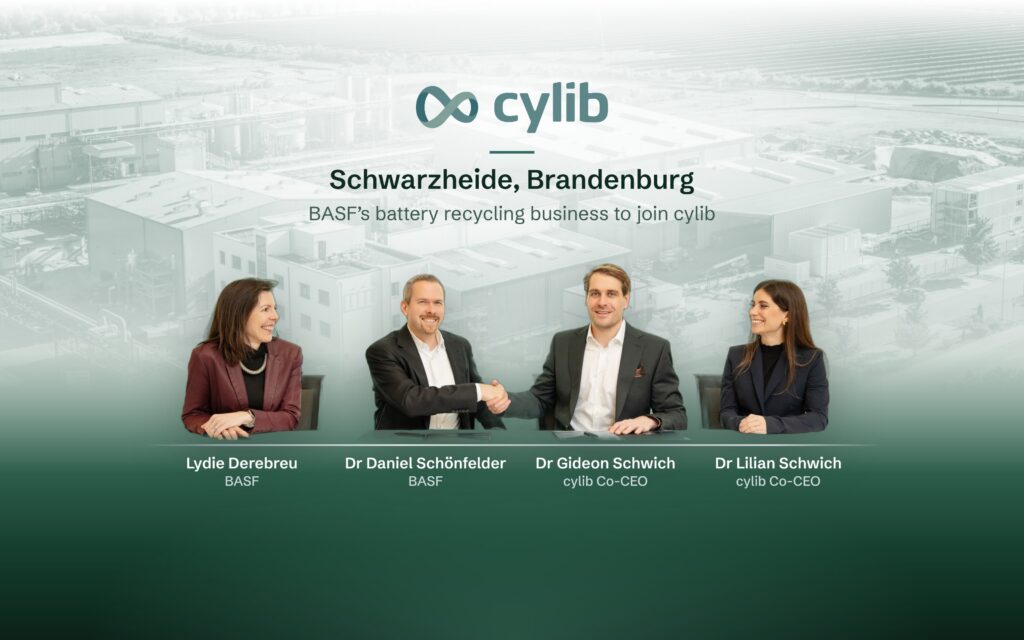 Photos: BASF · Logo: cylib
BASF’s Battery Recycling Business Finds a New Home at cylib
cylib has agreed to acquire BASF’s battery recycling business in Europe and North America, including the black mass and prototype plants in Schwarzheide. Closing is expected in 2027.
 Logo: Minespider
The Battery Passport Moves Onto the Factory Floor
BMZ has chosen Minespider to build Digital Battery Passports into series production in Poland and Germany, three months before the EU requirement takes effect.
 Graphic: cylib
Germany’s Breakthrough Agency Takes a Stake in cylib
SPRIND, Germany’s Federal Agency for Breakthrough Innovation, is investing in Aachen battery recycler cylib, a week after the company secured its first bank loan. The bet is on a process…
 Photo: courtesy of Dr Francisco Trinidad
Dr Francisco Trinidad
Former Director of Battery Technology, Exide · Alpha Beta Society
For forty-three years he advanced the oldest rechargeable battery there is, from a Madrid laboratory to the technology direction of a global…
 Photo: courtesy of Dr Graeme Fraser-Bell
Dr Graeme Fraser-Bell
Vice President, Lithium Sales · ENTEK
Three decades at the commercial heart of the battery separator industry, now helping scale ENTEK’s giga-facility in Indiana.
 Photo: courtesy of Jill Pestana
Jill Pestana
Founder & CEO, Pestana Solutions · Director of Research & Programming, NAATBatt International
A battery scientist with more than a dozen patents who built a career after being told her personality was ‘not that of…
Section 45X: same-facility and domestic content test for integrated components
- 1 JanNew Jersey: permanent labelling requirement, currently held back
- 1 JanWisconsin: producers must join a stewardship organisation and submit a plan
44 more fixed deadlines after this one
See every deadline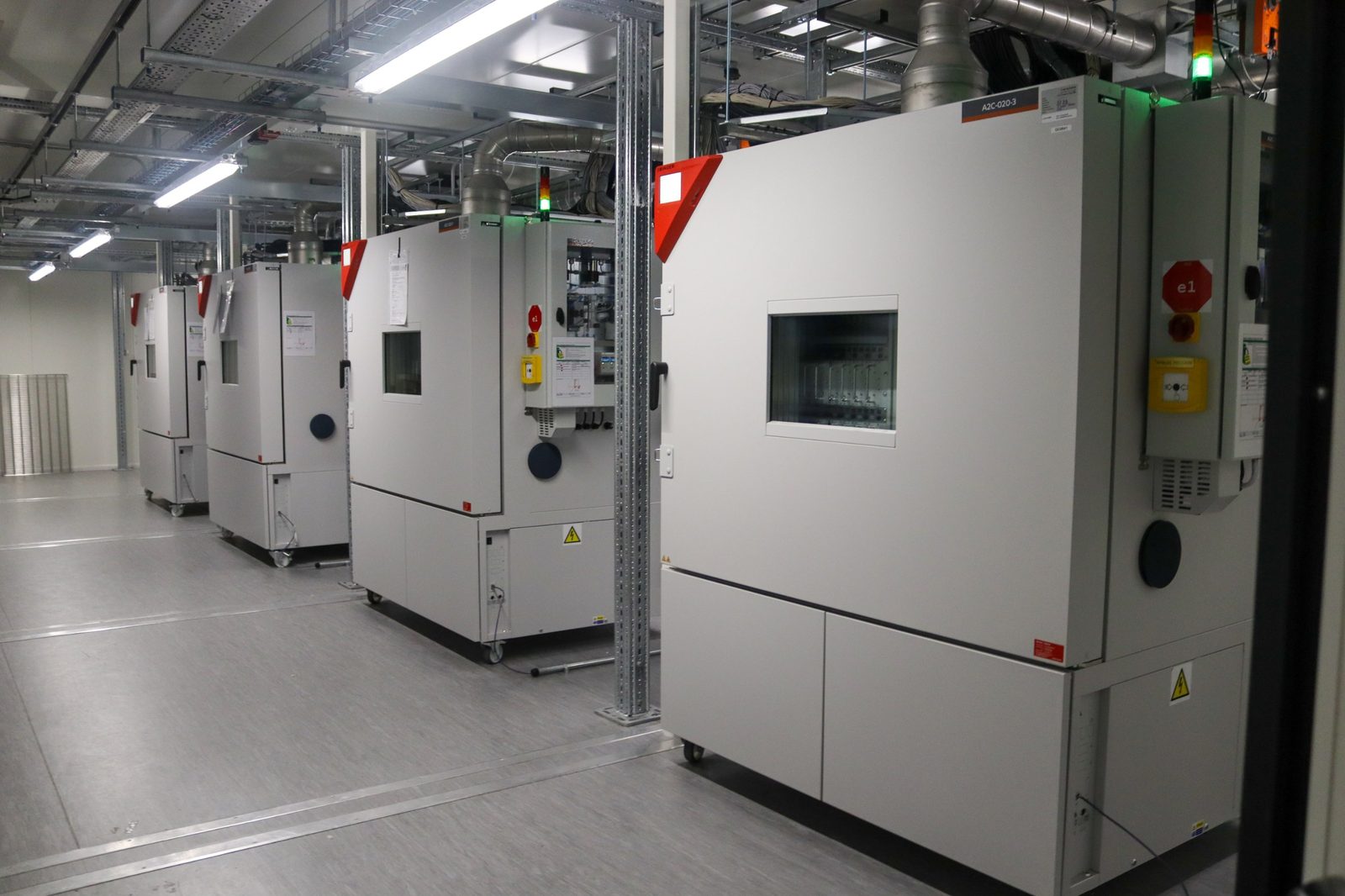 Photo: UKBIC
Battery cell formation can be 40% faster with only a modest hit to cycle life
- 30 NOVWorld Reuse & Recycling ForumShanghai
- 2 DECBattery Asset Management Summit EuropeRome
- 7 DECAABC - Advanced Automotive Battery ConferenceSan Diego
- 12 JANIndia Battery & Critical Materials ConferenceNew Delhi
- 20 JANIERC - International Electronics Reuse & Recycling CongressValencia