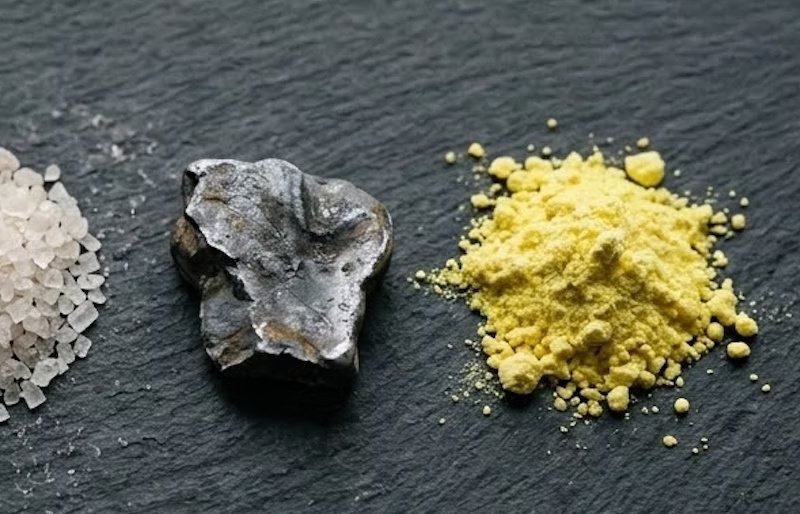
Where Sulfur and the Two Lithiums Fit
The Battery Ledger’s most recent piece argued that lithium, sodium and lead each have a job, and none has to beat the others. John Wood, who stepped down as chief executive of the sulfur-battery company Gelion this year and now serves as a senior advisor, replied with a fair addition. The story does not stop at three.
The argument in that piece was simple. Lithium for range, sodium for cost and cold, lead for the steady, recyclable work it has always done. Not a race with one winner, but a set of tools, each good at a different job.
The reply pointed out, reasonably, that the same logic keeps going, and named two more places it applies: the split inside lithium itself, and sulfur. Both are worth setting down, because this is where the idea earns its keep.
Inside lithium
Most people outside the industry hear “lithium battery” and picture one thing. It is really two, at least, and they made opposite bargains.
NMC, nickel manganese cobalt, is the one built for range. It carries the most energy for its weight, which is why it went into the premium, long-distance cars. It also carries the cost, and the supply-chain worry, of nickel and cobalt.
LFP, lithium iron phosphate, went the other way. Less energy by weight, but cheaper, safer, longer-lasting, and free of nickel and cobalt altogether. For years it was written off as the budget choice. Then the sums changed, and LFP took over great stretches of the market, standard-range cars, and most of grid storage, where a bit of extra weight costs nothing and cost and safety are the whole game.
Same lithium, two chemistries, and nobody is waiting for one to see off the other. They get picked cell by cell for the job in hand. The argument, already true one level down.
Where sulfur comes in
Sulfur is the newer name. The version doing the rounds is a nano-encapsulated sulfur cathode, and its pitch is a precise one: something near NMC’s energy, but made from sulfur rather than nickel and cobalt, and built on the lithium-ion lines that already exist rather than in a new kind of plant.
If it holds up at scale, it is not there to end lithium or sodium. It is after one particular job, high energy without the scarce-metal bill, on equipment the industry has already paid for. Another tool, another task.
The list was never going to stop at three
Put it together and the field looks less like a contest and more like a well-stocked workshop. Lead for the low-voltage, recyclable work. Sodium for cost and cold. LFP for cheap, safe, long-cycling storage. NMC for range. And sulfur, if it scales, for energy without the awkward metals.
That was the point to begin with. The better a chemistry gets at one job, the less it needs to win at all of them. The comment simply carried the idea further than the article did, which is the nicest thing a reader can do.
LFP and NMC characteristics, and their split across range, cost, safety and storage, from standard industry sources. The nano-encapsulated sulfur cathode (drop-in on existing lithium-ion lines, near-NMC energy without nickel or cobalt) from Gelion’s own materials. John Wood’s tenure as Gelion CEO and move to Senior Advisor, with Matthew Wood appointed CEO in June 2026, from Gelion’s announcements. Written from the public record.
Read next
All insights →
 Newest on The RegisterDr Francisco TrinidadFormer Director of Battery Technology, Exide · Alpha Beta SocietyRead the profile →