Where the Graphite Comes From
The battery world spends most of its worry on lithium. But the material that may be hardest to bring home is the one in the anode, graphite, and it runs almost entirely through China.
Ask most people to name the material a battery depends on, and they will say lithium. It is a fair answer: lithium is in the name, and its price swings make headlines. But there is a strong case that the harder problem, the one the Western supply chain is least prepared for, sits at the other end of the cell. It is graphite, the material in the anode, and it comes overwhelmingly from one country.
The scale of the concentration
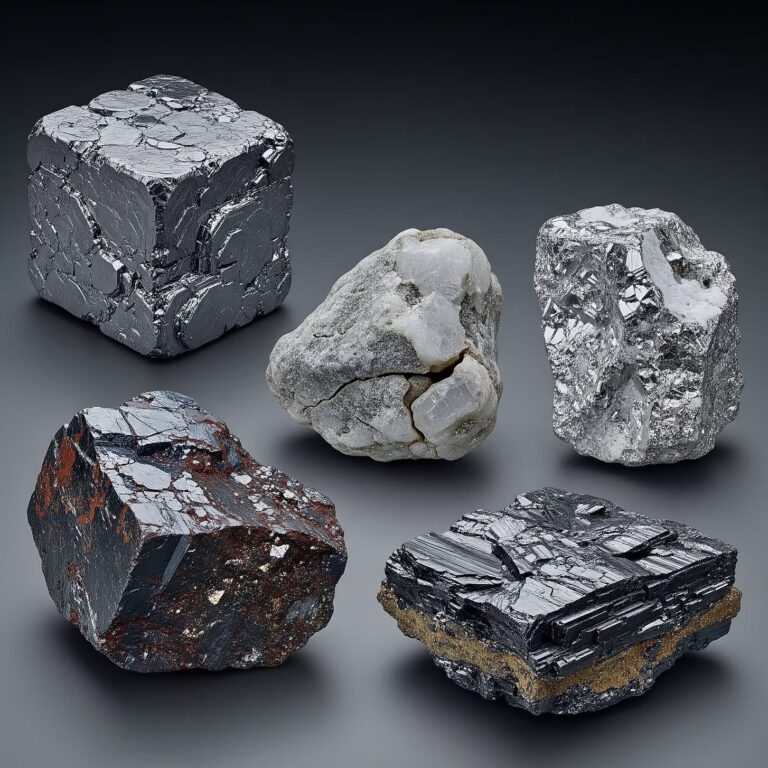
Graphite is the standard anode material in almost every lithium-ion battery. Roughly a kilogram of it goes into every kilowatt-hour of capacity, which makes it, by weight, one of the largest single inputs in a cell. And at every stage of getting it battery-ready, China dominates.
The figures are stark. China mines around 80% of the world’s natural graphite, 82% in 2025, by the US Geological Survey’s estimate. It controls close to 90% of the capacity to turn that flake graphite into the rounded “spherical” form an anode needs. And it produces more than 90%, by some measures over 95%, of the synthetic graphite and finished anode material that goes into cells. Benchmark Mineral Intelligence puts China’s share of the whole graphite-anode supply chain at around three-quarters, and expects it to hold over 85% of the anode market by the end of the decade.
For comparison, that is a tighter grip than China holds on lithium, nickel or cobalt, where mining and processing are at least somewhat spread across other countries. With graphite, there is much less of an alternative to fall back on.
Why it is harder than it looks
The instinct, when a supply chain is this concentrated, is to build elsewhere. That is happening: there are mine-to-anode projects under way from Alaska to Alabama to Louisiana, and companies working on both natural and synthetic routes. But graphite resists reshoring for reasons worth understanding.
The first is that the difficulty is in the processing, not the mining. Finding graphite is not really the problem; turning it into anode-grade material is. The steps that follow mining, purifying, shaping into spheres, and, for synthetic graphite, the hugely energy-intensive graphitisation, are where China’s dominance actually sits. Graphitisation runs at very high temperatures for days, and China holds close to all of the world’s capacity for it.
The second is cost. Chinese anode material is cheap, and its pricing effectively sets a global floor at or below what a new Western plant can produce for. A company building a domestic anode facility has to survive years of customer qualification, high capital costs, and competition priced beneath its own, which is why almost every serious Western project leans on some form of government support.
The third is the choice between natural and synthetic. Synthetic graphite, made from petroleum coke, is purer and longer-lasting, and increasingly favoured. But it costs roughly twice as much as natural graphite and carries a much larger carbon footprint. Neither route is an easy win.
Why it matters now
This is not an abstract worry. In December 2024, China introduced export controls on graphite and other critical materials, citing national security. Under the trade truce reached in late 2025, it suspended the tighter measures on shipments to the United States, but only temporarily: the relevant suspensions run through November 2026, after which the controls could return. The reprieve is real, and it has steadied prices, but it is a reminder of how much leverage sits at this one point in the chain.
Meanwhile demand is going in one direction. Graphite demand is expected to rise three to four times over the coming decade, faster than almost any other battery material, as hundreds of new gigafactories come online across North America and Europe. Every one of those plants needs an anode, and today the anode still leads back to China.
The overlooked part of the supply chain
There is a reason graphite gets less attention than lithium. It is unshowy, it does not trade on a visible exchange the way lithium chemicals increasingly do, and its story is one of processing and tolerances rather than dramatic price spikes. But that is exactly why it deserves a closer look. The parts of a supply chain that get taken for granted are the ones that turn out to matter most when they are squeezed.
Bringing graphite home is not impossible. It is being attempted, seriously, in several countries, and some of it will work.
A figure going on the record with us this week, a veteran of the separator industry, put it more optimistically still: with sustained trade protection, manufacturing incentives and a rapid build-out of domestic capacity, he believes the United States could fully decouple its lithium-ion supply chain from China by 2030. Graphite is the hardest test of that ambition. But it is a test the industry is now taking seriously, and the prize, a supply chain that no longer runs through a single country, is exactly why it is worth the effort.
Graphite supply-chain figures from the US Geological Survey, Benchmark Mineral Intelligence, and industry reporting, 2025-2026. China’s December 2024 export-control measures, and their temporary suspension for US-bound shipments (running through November 2026 under the US-China trade truce), as reported by MOFCOM announcements and contemporaneous coverage; China’s military-end-use restrictions remain in place. Demand-growth projections (three to four times over the decade) and the approximate one kilogram of graphite per kilowatt-hour figure are as stated in those sources. Written from the public record.
Read next
All insights →

 Newest on The RegisterDr Francisco TrinidadFormer Director of Battery Technology, Exide · Alpha Beta SocietyRead the profile →