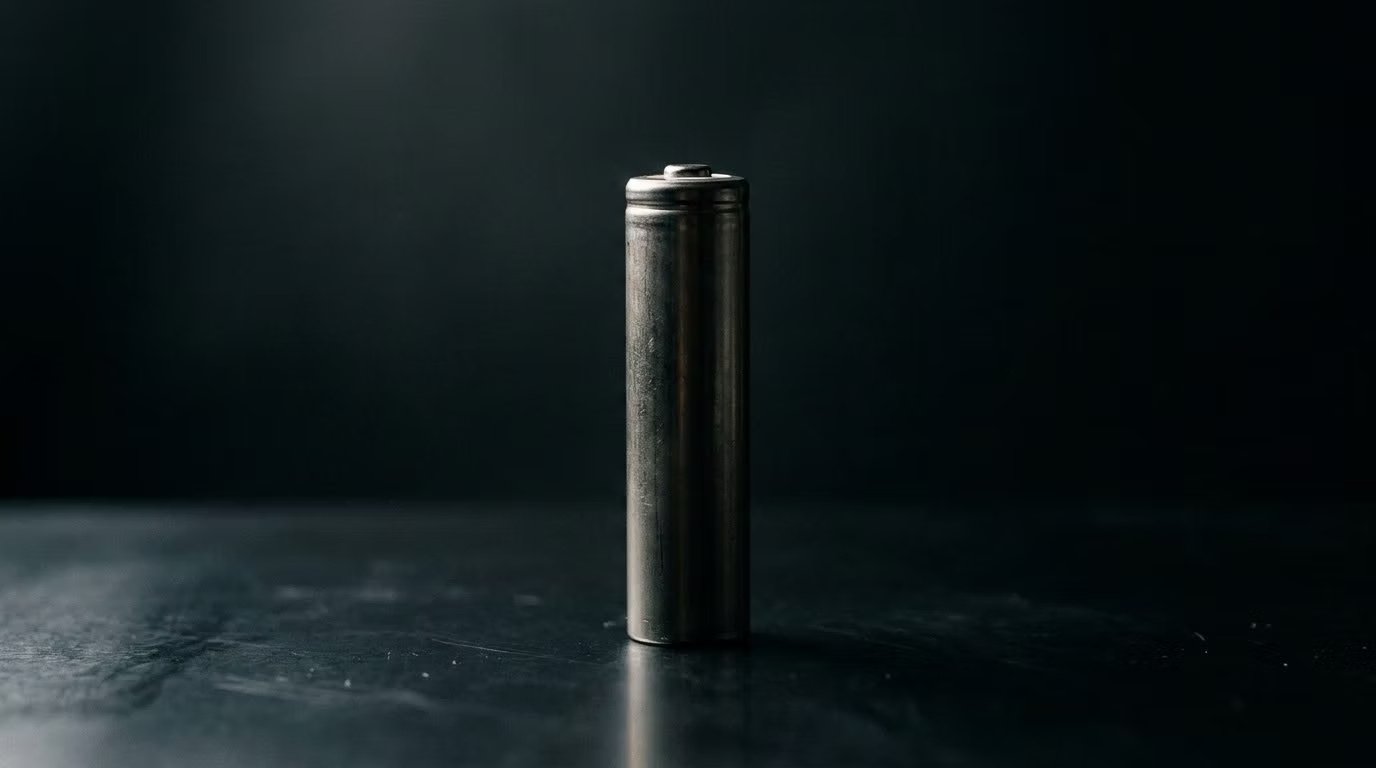
The Battery Price That Governs
Lithium-ion battery prices fell to a record low in 2025, to $108 a kilowatt-hour on average. The striking part is that they fell even though some of the metals inside them got more expensive.
Here is a number worth sitting with. In 2025, the average price of a lithium-ion battery pack fell to $108 per kilowatt-hour, a record low, and 93% cheaper than it was in 2010. It is the single number that, more than any other, has governed the energy transition: when batteries get cheaper, electric cars, grid storage and everything downstream get more possible. The 2025 figure, from BloombergNEF’s annual survey, is the most recent full-year reading, and it carries a twist worth understanding.
Cheaper batteries, dearer metals
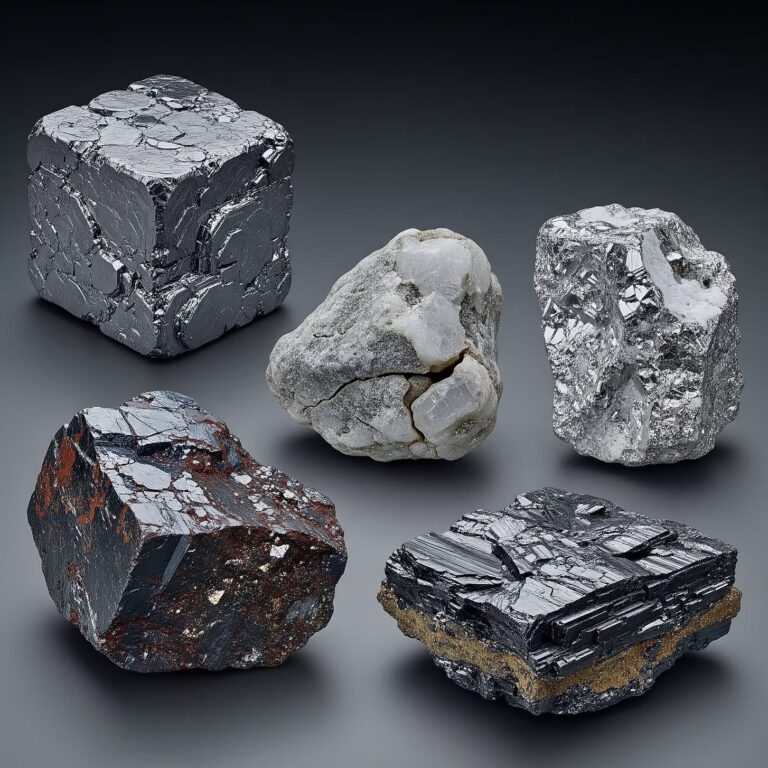
Normally, battery prices track the cost of the metals inside them. When lithium or cobalt spikes, packs get more expensive; when metals fall, packs follow. In 2025, that link broke. Costs rose for some key battery metals, lithium on the back of supply risks in China, cobalt on new export quotas in the Democratic Republic of Congo, and yet pack prices fell 8% anyway.
How? Three things absorbed the metal increases. The relentless shift to lower-cost lithium-iron-phosphate (LFP) chemistry, which uses no cobalt or nickel. A glut of cell-manufacturing capacity, far more factory output than the market needs, which forces fierce price competition. And the maturing of the industry’s own buying: long-term contracts and hedging that smooth out the metal swings.
The takeaway is significant: 2025 showed that pack prices can fall even when raw-material costs rise. That is what a maturing, commoditising industry looks like.
The milestone inside the milestone
Two numbers underneath the headline are worth pulling out.
Electric-vehicle packs came in at $99 per kilowatt-hour, the second year running below the symbolic $100 mark, the level long associated with electric cars approaching cost parity with petrol and diesel. BloombergNEF notes that parity has broadly been reached in China, though not yet everywhere.
And, for the first time, batteries for stationary storage became the cheapest category of all, at just $70 per kilowatt-hour, a 45% fall in a single year. That is a genuinely new development. It used to be that grid storage paid a premium; now it is the bargain of the battery world. It helps explain why, according to the IEA, battery storage was the fastest-growing power technology in 2025, built at a pace few predicted even three years ago.
For context, the cheapest LFP packs BNEF found were as low as $50 per kilowatt-hour. The floor keeps dropping.
Where prices go next
BloombergNEF expects the decline to continue, though more slowly: a further fall in 2026, as the easy gains from scale and LFP adoption give way to harder-won reductions. The era of 20%-a-year drops is over; the industry is into smaller, harder-won cuts now.
The next wave of reductions is expected to come less from cheaper metals and more from better technology and manufacturing. BNEF points to silicon and lithium-metal anodes, solid-state electrolytes, new cathode materials, and new cell-manufacturing processes as the levers that will push prices lower from here. In other words, the easy gains are largely banked; the next ones have to be engineered.
The pressures underneath
Two forces sit under these low prices, and both bear watching.
The first is the metals. Lithium and cobalt have come under renewed upward pressure, lithium from supply risks around Chinese operations, cobalt from export quotas in the Democratic Republic of Congo. So far, the industry has absorbed those increases through LFP adoption and smarter buying. But if metal prices climb far enough, that buffer only stretches so far.
The second is the overcapacity itself. The glut of cell-manufacturing capacity that has driven such fierce competition is not a permanent state. Factories running below capacity lose money; at some point the weakest close, supply tightens, and the downward pressure on prices eases.
The responses are already visible. The shift to LFP and, increasingly, sodium-ion reduces exposure to the most volatile metals. Recycling, recovering lithium, nickel and cobalt from spent batteries, is being built out partly to blunt exactly this kind of supply shock. And the push to reshore and diversify supply chains, away from single points of failure, is in large part an insurance policy against the metal and trade risks that could otherwise push prices back up.
What it means
None of this reverses the direction of travel. Batteries are still getting cheaper, and the 2025 figure is a landmark: packs got cheaper while some of their ingredients got dearer, which had not happened before. It tells you the industry has crossed into a new phase, more mature, more commoditised, harder on the companies that make the cells even as it gets better for everyone who buys them.
That is the truth under the whole energy transition. The thing that makes it possible is a number on a battery pack, and that number is still falling. Worth marking.
All figures from BloombergNEF’s 2025 Lithium-Ion Battery Price Survey (9 December 2025): the $108/kWh average, the 8% annual fall, the 93% decline since 2010, the $99/kWh EV and $70/kWh storage figures, the $81/kWh LFP and $128/kWh NMC averages, and the lowest observed LFP pack at $50/kWh. Battery storage as the fastest-growing power technology in 2025 per the IEA. BNEF cites higher costs tied to lithium supply risks and DRC cobalt export quotas, and expects a further price decline in 2026. Written from the public record.
Read next
All insights →

 Newest on The RegisterDr Francisco TrinidadFormer Director of Battery Technology, Exide · Alpha Beta SocietyRead the profile →